

Steps to Challenge License Suspension for a First-Offense DUI in New Jersey
When facing a first-offense DUI in New Jersey, the immediate threat is often the automatic loss of driving privileges. Administrative license suspension is a separate legal process from the criminal court case, meaning you must act quickly to protect your mobility. According to recent legal analyses of municipal court procedures, the window to request a hearing is strictly limited, and missing this deadline results in an automatic waiver of your right to contest the suspension. This guide outlines the precise procedural steps to challenge that suspension and keep your driving record intact during the pendency of your case.
Understanding the Suspension Trigger
In New Jersey, a first-offense DUI triggers an administrative license suspension regardless of the outcome in criminal court. This suspension is imposed by the Motor Vehicle Commission (MVC) and is distinct from any criminal penalties. The duration of this suspension depends heavily on your blood alcohol concentration (BAC) level at the time of arrest.
If your BAC was between 0.08% and 0.10%, the standard suspension period is three months. However, if your BAC was 0.10% or higher, the suspension period increases to seven to nine months. During this time, you are generally prohibited from driving, with very limited exceptions for hardship permits. Understanding these specific thresholds is the first step in determining the viability of your challenge.
For a deeper look at how BAC levels impact penalties, you can review our detailed analysis on fighting fines and protecting your record. It is crucial to note that the burden of proof in these administrative hearings is different from criminal trials. The state must prove that the traffic stop was lawful and that the chemical test was administered correctly.
Requesting the Administrative Hearing
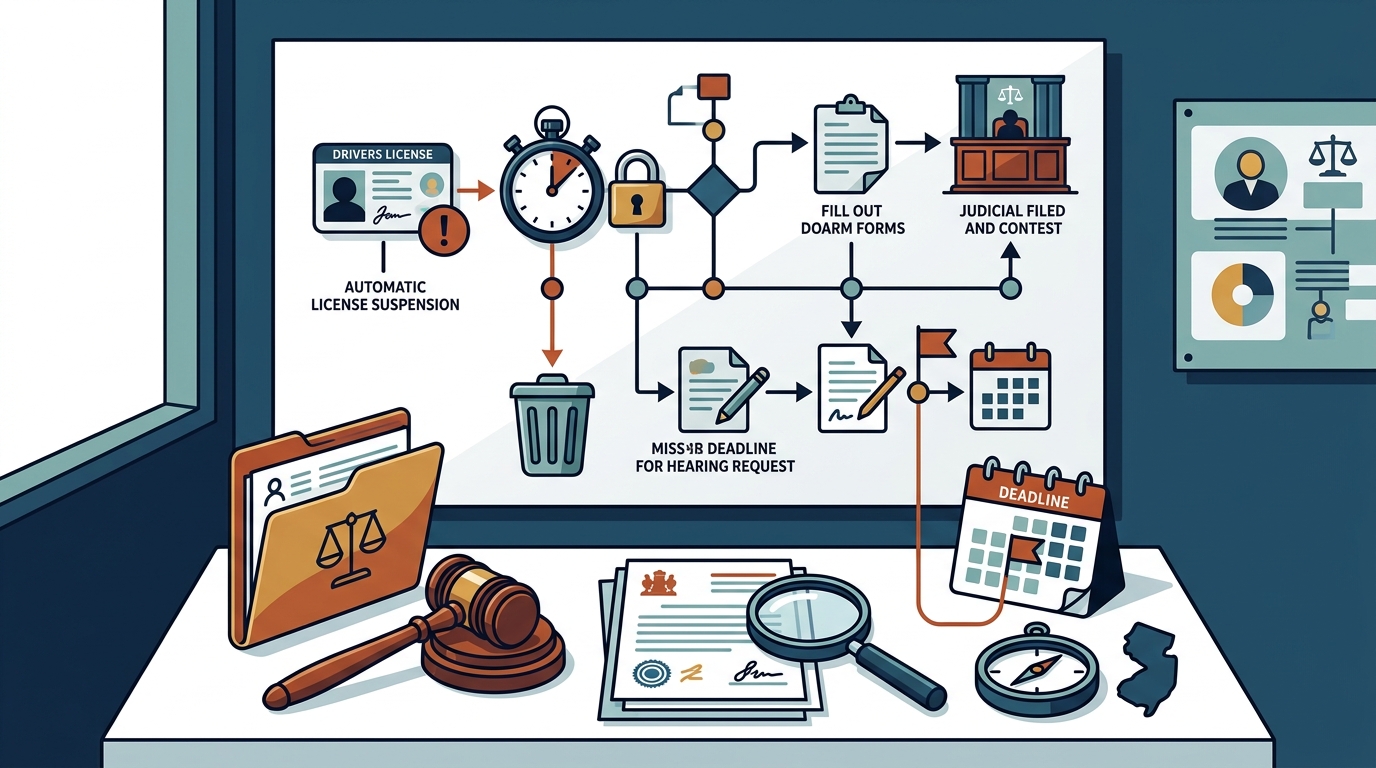
The most critical step in challenging your suspension is requesting an administrative hearing. You must submit this request within 10 days of receiving the suspension notice from the New Jersey Motor Vehicle Commission. If you fail to meet this strict deadline, you automatically waive your right to a hearing, and the suspension becomes final.
The request must be made in writing and sent to the Office of Administrative Law (OAL). The letter should include your name, driver's license number, the date of the suspension notice, and a clear statement requesting a hearing. You should also request a copy of the police report and the breathalyzer calibration records.
Timing is everything in these cases. Missing the 10-day window is the most common reason for failed challenges. If you are unsure how to draft this request, consulting with an experienced attorney can ensure that all procedural requirements are met. You can learn more about the importance of timely action in our guide on protecting your license after a first DUI.
Preparing Your Defense Evidence
Once the hearing is scheduled, the focus shifts to evidence. The goal is to identify flaws in the police officer's conduct or the reliability of the breath testing device. Common grounds for challenging the suspension include:
- Illegal Traffic Stop: If the officer did not have reasonable suspicion to pull you over, the subsequent evidence may be suppressed.
- Improper Calibration: The Alcotest 7110 MK-III device must be calibrated regularly. If the calibration records are missing or show discrepancies, the test results are invalid.
- Observation Period: Officers are required to observe the driver for 20 minutes prior to the breath test to ensure no food or drink is consumed. Failure to do so can invalidate the results.
- Medical Conditions: Certain medical conditions, such as GERD or diabetes, can produce false high readings on breathalyzers.
Gathering this evidence requires a thorough review of the police report and the maintenance logs for the breathalyzer. This is where legal expertise becomes invaluable. Our team at the Law Office of Edward Appel specializes in dissecting these technical details. You can read about our approach to challenging DUI charges to understand our methodology.
The Hearing Process
The administrative hearing is conducted by an administrative law judge, not a jury. The process is less formal than a criminal trial but still requires precise legal arguments. The hearing typically follows this structure:
- Opening Statements: Both the prosecutor and the defendant present their initial positions.
- Witness Testimony: The arresting officer testifies about the traffic stop, field sobriety tests, and the breath test administration.
- Cross-Examination: Your attorney has the opportunity to cross-examine the officer to highlight inconsistencies or procedural errors.
- Closing Arguments: Both sides summarize their case, emphasizing the flaws in the state's evidence.
The administrative law judge will then issue a decision. If the judge finds in your favor, the suspension is lifted. If the judge rules against you, the suspension remains in effect. It is important to understand that this hearing does not determine your guilt or innocence in the criminal case. It only determines whether your license should be suspended.
For a comprehensive overview of our legal services, including DUI defense, please visit our practice areas page. We provide dedicated representation to ensure your rights are protected throughout this process.
Post-Hearing Options
If the administrative law judge rules against you, you still have options. You can appeal the decision to the New Jersey Superior Court, Law Division. This appeal must be filed within 30 days of the hearing decision. The appeal process is complex and requires strict adherence to court rules.
Alternatively, you may be eligible for an ignition interlock device (IID) program. In New Jersey, first-time offenders with a BAC of 0.10% or higher are required to install an IID in their vehicle for a period of three to nine months. This allows you to drive with certain restrictions while the suspension is in effect.
Understanding the nuances of the IID program is crucial for minimizing the impact on your daily life. You can find more details about fighting license loss and penalties in our blog. Our attorneys can guide you through the installation and compliance requirements to ensure you remain in good standing.
Key Takeaways
- Act Immediately: You have only 10 days to request an administrative hearing after receiving your suspension notice.
- Separate Processes: The administrative hearing is distinct from your criminal DUI case and focuses solely on license suspension.
- BAC Matters: A BAC of 0.08% to 0.10% results in a 3-month suspension, while 0.10% or higher results in a 7-9 month suspension.
- Evidence is Key: Challenging the legality of the stop or the reliability of the breathalyzer is your best defense.
- Legal Representation: Navigating the Office of Administrative Law requires specialized knowledge of New Jersey motor vehicle law.
- Appeal Rights: You have 30 days to appeal an adverse hearing decision to the Superior Court.
- IID Option: Installing an ignition interlock device may allow you to drive with restrictions during the suspension period.
Frequently Asked Questions
How long do I have to request a hearing?
You must request an administrative hearing within 10 days of receiving your suspension notice from the Motor Vehicle Commission. Missing this deadline waives your right to contest the suspension.
What is the difference between the administrative hearing and the criminal court case?
The administrative hearing determines whether your license should be suspended based on the DUI arrest. The criminal court case determines your guilt or innocence and any associated criminal penalties, such as fines or jail time.
Can I drive during the suspension period?
Generally, no. However, you may be eligible for a hardship permit or an ignition interlock device program, which allows you to drive for specific purposes like work or school.
What happens if I lose the administrative hearing?
If you lose the hearing, the suspension remains in effect. You have 30 days to appeal the decision to the New Jersey Superior Court, Law Division.
Do I need a lawyer for the administrative hearing?
While not legally required, having an experienced DUI attorney significantly increases your chances of a favorable outcome. They can identify procedural errors and challenge the evidence effectively.
What is the cost of an ignition interlock device?
The cost varies by provider but typically includes installation fees and monthly monitoring fees. Some costs may be covered by insurance or state programs depending on your specific circumstances.
How does a first-offense DUI affect my insurance?
A DUI conviction can lead to significantly higher insurance premiums. However, challenging the suspension may help mitigate some of the long-term financial impacts by keeping your driving record clean during the pendency of the case.
Protect Your Driving Privileges Today
Do not let a first-offense DUI derail your life. The window to challenge your license suspension is narrow, and the stakes are high. Our team at the Law Office of Edward Appel has over 35 years of experience helping New Jersey residents navigate these complex legal challenges. We provide personalized attention and strategic defense to protect your rights and your future.
Contact us today for a free consultation. Call 856-856-2373 or visit our contact page to schedule an appointment. Let us fight for your driving privileges and help you move forward with confidence.