

Navigating a Criminal Defense Case in New Jersey: A Step-by-Step Guide
Facing criminal charges in New Jersey is a high-stakes scenario that demands immediate, strategic action. According to recent legal data, the majority of individuals charged with offenses in the Garden State make critical errors in their initial interactions with law enforcement, often leading to unfavorable plea deals or harsher sentencing outcomes. This guide outlines the precise procedural steps required to protect your rights, challenge evidence, and secure the best possible outcome for your case.
Step 1: The Immediate Post-Arrest Phase
The hours following an arrest are the most critical period in any criminal defense case. In New Jersey, the initial appearance before a judge typically occurs within 24 to 48 hours of detention. During this phase, the court sets bail and outlines the conditions of release. It is vital to understand that anything you say to law enforcement can be used against you in court.
Many defendants mistakenly believe that cooperating fully with police will result in leniency. However, without legal counsel, this cooperation often provides the prosecution with the necessary evidence to build a strong case. The first step in your defense is securing representation from an experienced attorney who can intervene before formal charges are filed or during the early stages of investigation.
For a comprehensive overview of the legal services available to protect your rights, visit our practice areas page.
Step 2: Understanding Your Constitutional Rights
New Jersey residents are protected by both the U.S. Constitution and the New Jersey State Constitution. Two specific rights are paramount during the criminal justice process: the right to remain silent and the right to counsel.
Miranda Rights are the legal warnings given to suspects in custody. If these rights are not properly administered, any confession obtained may be suppressed. However, silence must be invoked explicitly. Merely remaining quiet is often not enough; you must clearly state that you wish to remain silent and that you want an attorney.
Furthermore, the right to counsel ensures that you have legal representation during all critical stages of the proceedings, including police interrogations, lineups, and court hearings. If you cannot afford an attorney, the court will appoint one, but private counsel often provides more dedicated resources and attention to detail. For insights on how to protect your record during this phase, read our article on fighting DUI fines and protecting your record.
Step 3: The Pre-Trial Conference and Discovery
Once charges are filed, the case moves into the pre-trial phase. In New Jersey, this involves a series of pre-trial conferences where the prosecution and defense discuss the status of the case. A crucial component of this stage is discovery, which is the process by which the defense obtains evidence held by the prosecution.
Discovery includes police reports, witness statements, body camera footage, and forensic lab results. Your attorney will meticulously review this material to identify inconsistencies, procedural errors, or constitutional violations. This review is essential for building a defense strategy. For example, if the police failed to follow proper protocol during a traffic stop, the resulting evidence may be excluded from trial.
Understanding the nuances of New Jersey's municipal and superior courts is vital. Our team provides specialized guidance for these complex environments. Learn more about our attorney profile and experience.
Step 4: Strategic Motions and Evidence Suppression
Before a case goes to trial, your attorney may file various pre-trial motions. These legal documents ask the judge to rule on specific issues that could impact the case. Common motions include:
- Motion to Suppress Evidence: Arguing that evidence was obtained illegally and should be excluded.
- Motion to Dismiss: Requesting that the charges be dropped due to lack of probable cause or procedural defects.
- Motion for a Bill of Particulars: Demanding more specific details about the prosecution's case.
Successfully suppressing key evidence can weaken the prosecution's case significantly, sometimes leading to a dismissal or a favorable plea bargain. This is where the expertise of a seasoned trial lawyer becomes indispensable. For detailed information on our approach to marijuana DUI defense, explore our specialized resources.
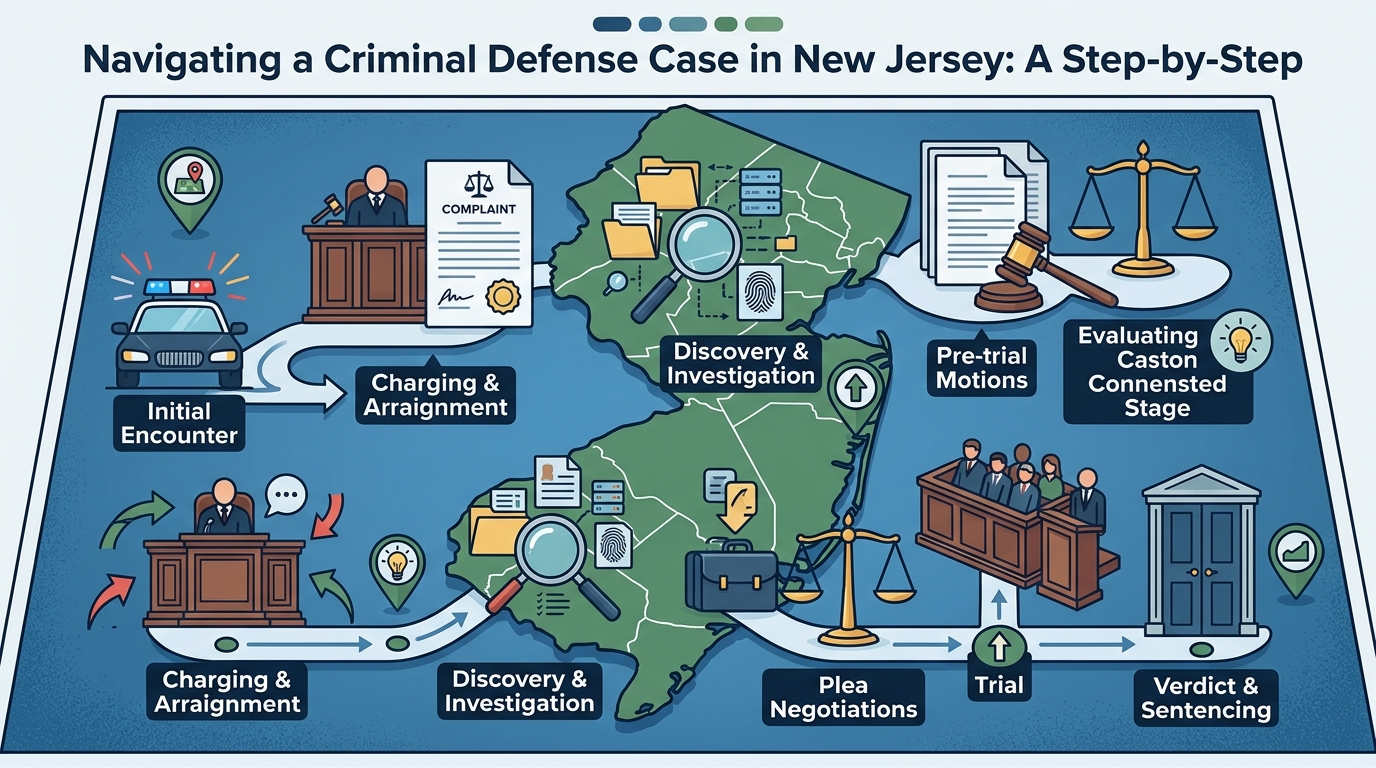
Step 5: Negotiation vs. Trial Preparation
Most criminal cases in New Jersey are resolved through plea negotiations rather than going to trial. However, this does not mean you should accept the first offer from the prosecution. Your attorney will negotiate for reduced charges, lower sentencing recommendations, or alternative dispositions such as diversion programs.
If a satisfactory agreement cannot be reached, the case proceeds to trial. In New Jersey, defendants have the right to a jury trial or a bench trial (judge only). Trial preparation involves selecting a jury, preparing witnesses, and developing opening and closing statements. The goal is to create reasonable doubt in the minds of the jurors.
For a comparison of different legal outcomes and strategies, review our legal blog for case studies and expert analysis.
Step 6: Sentencing and Post-Conviction Relief
If the case results in a conviction, the next step is sentencing. New Jersey has strict sentencing guidelines, particularly for drug offenses, weapons charges, and DUI/DWI cases. The judge considers factors such as the nature of the offense, the defendant's criminal history, and the impact on the victim.
Post-conviction, there may be opportunities for relief. This can include appeals if legal errors occurred during the trial, or applications for expungement after a certain period of good behavior. Expungement can help clear your criminal record, improving employment and housing prospects. For more on contacting our firm for post-conviction assistance, reach out directly.
Key Takeaways
- Immediate Action: Secure legal representation within 24 hours of arrest to protect your rights during initial police interactions.
- Silence is Strategic: Explicitly invoke your right to remain silent and your right to an attorney before speaking to law enforcement.
- Discovery is Critical: Thoroughly review all police reports and forensic evidence for procedural errors or constitutional violations.
- Motions Matter: Pre-trial motions to suppress evidence can significantly weaken the prosecution's case before trial begins.
- Negotiation Leverage: Do not accept the first plea offer; experienced counsel can often secure better terms through skilled negotiation.
- Trial Readiness: Even if a plea deal is likely, preparing for trial strengthens your negotiating position.
- Post-Conviction Options: Explore expungement and appeal options to mitigate long-term consequences of a conviction.
Frequently Asked Questions
How long does a criminal case take in New Jersey?
The duration varies widely depending on the complexity of the case, the court's docket, and whether the case goes to trial. Simple municipal court cases may resolve in a few months, while complex superior court cases can take over a year.
What is the difference between a disorderly persons offense and a criminal offense?
A disorderly persons offense is a misdemeanor-level charge in New Jersey, punishable by up to six months in jail and fines. A criminal offense (indictable crime) is a felony-level charge with potential prison sentences exceeding six months. The procedural rights and severity of consequences differ significantly between the two.
Can I get my criminal record expunged in New Jersey?
Yes, under certain conditions. New Jersey law allows for the expungement of disorderly persons offenses and some indictable crimes after a waiting period, typically five to ten years, provided the individual has no further legal trouble. Specific eligibility criteria apply.
What happens if I miss a court date in New Jersey?
Missing a court date results in a bench warrant for your arrest. The court will also likely revoke any bail or release conditions previously granted. It is crucial to contact your attorney immediately if you anticipate any scheduling conflicts.
Do I need a lawyer for a DUI/DWI charge in New Jersey?
While not legally required, having a lawyer is highly advisable. DUI/DWI cases involve complex administrative and criminal proceedings, including license suspensions and ignition interlock requirements. An experienced attorney can challenge the validity of the breath test and other evidence.
What is a pre-trial conference?
A pre-trial conference is a meeting between the judge, prosecutor, and defense attorney to discuss the status of the case, potential plea agreements, and trial dates. It is a key step in the progression of a criminal case toward resolution.
How does bail work in New Jersey?
Bail is set by the judge to ensure the defendant's appearance in court. New Jersey has undergone significant bail reform, focusing on risk assessment rather than just financial ability to pay. In many cases, release on personal recognizance is possible if the defendant poses no flight risk or danger to the community.
Take Control of Your Legal Future
Navigating a criminal defense case in New Jersey requires precision, knowledge, and unwavering advocacy. The steps outlined above provide a roadmap, but the specific details of your case will dictate the strategy. Do not face the legal system alone. Contact the Law Office of Edward Appel today to schedule a consultation and begin building your defense.
Click here to contact our team and secure the experienced legal representation you deserve.