

Criminal Defense vs. Personal Injury: Choosing the Right Legal Path
Legal emergencies often strike without warning, leaving individuals confused about which type of attorney can actually help them. Whether you are facing criminal charges or suffering from injuries due to an accident, the stakes are incredibly high. Understanding the fundamental differences between criminal defense and personal injury law is the first step toward protecting your rights and your future. This guide breaks down the critical distinctions to help you make an informed choice. (Contact Law Office Of)
Core Differences in Legal Focus
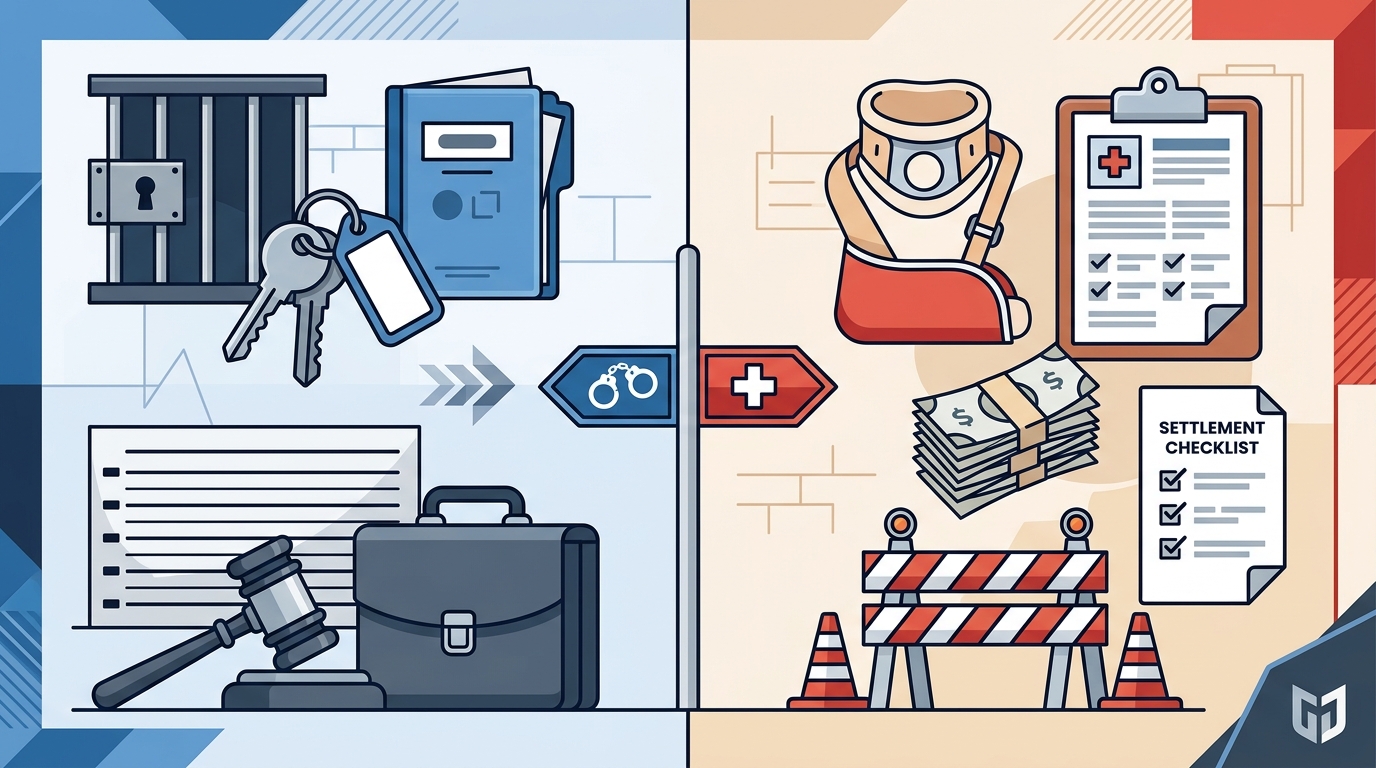
The primary distinction lies in who is bringing the action and what is at risk. Criminal defense involves the government prosecuting an individual for violating state or federal laws. The goal is to determine guilt or innocence, with potential penalties including jail time, fines, and a permanent criminal record. In contrast, personal injury law is a civil matter. It involves a private party suing another party for damages caused by negligence or intentional harm. The focus here is on financial compensation for medical bills, lost wages, and pain and suffering.
Criminal defense attorneys, such as those at the Law Office of Edward Appel, specialize in protecting constitutional rights during police investigations and court proceedings. They deal with charges ranging from DUI/DWI to serious felonies. Personal injury lawyers, on the other hand, focus on tort law. They work to establish liability and calculate the monetary value of a client's losses. While both fields require deep legal knowledge, the strategies and daily tasks are vastly different.
Burden of Proof and Legal Standards
One of the most critical differences is the standard of proof required to win a case. In criminal defense, the prosecution must prove guilt "beyond a reasonable doubt." This is the highest standard in the legal system. It means that the evidence must be so convincing that there is no logical alternative to the conclusion that the defendant is guilty. If there is any reasonable doubt, the jury must acquit the defendant. This high bar exists because the stakes involve the loss of liberty.
Personal injury cases operate under a much lower standard: "preponderance of the evidence." This means that it is more likely than not that the defendant caused the injury. In practical terms, the plaintiff only needs to show that there is a greater than 50% chance that the defendant was at fault. This difference significantly impacts how attorneys build their cases. Criminal defense lawyers look for any gap in the prosecution's narrative to create doubt. Personal injury attorneys focus on building a cohesive narrative of negligence and causation to meet the 51% threshold.
The Role of the Attorney
The day-to-day work of these attorneys diverges sharply based on the nature of the case. A criminal defense attorney spends significant time reviewing police reports, challenging the admissibility of evidence, and negotiating with prosecutors. They must be prepared for trial at a moment's notice. For example, in a DUI defense, an attorney might challenge the reliability of breathalyzer tests or the legality of the traffic stop. This requires a deep understanding of constitutional law and procedural rules.
Personal injury attorneys, meanwhile, act as investigators and negotiators. They gather medical records, interview witnesses, and consult with experts to reconstruct the accident. Their primary goal is often to secure a fair settlement before going to trial. However, they must be prepared to litigate if the insurance company refuses to offer adequate compensation. The role is less about fighting the state and more about fighting for the client's financial recovery against powerful insurance entities.
Potential Case Outcomes
The results of these two legal paths are fundamentally different. In a criminal case, the outcome is a verdict of guilty or not guilty. A not guilty verdict means freedom, but it does not necessarily mean the person is innocent. It simply means the state failed to prove its case. A guilty verdict can lead to incarceration, probation, fines, and a criminal record that affects employment and housing opportunities. Expungement may be possible later, but the initial impact is severe.
In a personal injury case, the outcome is typically a monetary award. If the plaintiff wins, they receive compensation for their damages. This can include economic damages like medical bills and lost income, as well as non-economic damages like pain and suffering. In rare cases of egregious conduct, punitive damages may be awarded to punish the defendant. There is no jail time involved for the defendant in a civil suit, but the financial consequences can be substantial.
Fee Structures and Costs
How you pay your attorney is another major consideration. Criminal defense attorneys typically charge a flat fee or an hourly rate. This is because the scope of work is often defined by the charges and the court timeline. You pay for their time and expertise regardless of the outcome. This structure ensures that the attorney is motivated to work efficiently and effectively on your behalf.
Personal injury attorneys almost exclusively work on a contingency fee basis. This means they do not charge upfront fees. Instead, they take a percentage of the settlement or verdict, usually around 33% to 40%. If you do not win your case, you typically owe no legal fees. This structure makes legal representation accessible to those who may not have the funds to pay hourly rates. It also aligns the attorney's interests with yours, as they only get paid if you do.
When to Hire Each Type of Lawyer
Knowing when to seek help is crucial. You should contact a criminal defense attorney immediately if you are arrested, questioned by police, or receive a subpoena. Time is of the essence in criminal cases to preserve evidence and protect your rights. Early intervention can often lead to charges being dropped or reduced. For instance, a skilled DUI lawyer can challenge the initial stop or the testing procedures to dismiss the case entirely.
You should consult a personal injury attorney if you have been injured in an accident caused by someone else's negligence. This includes car crashes, slip and falls, or medical malpractice. It is important to act quickly because evidence can disappear and witness memories can fade. An attorney can help you navigate the complex insurance claims process and ensure you receive fair compensation for your injuries.
Comparison of Legal Services
| Feature | Criminal Defense | Personal Injury |
|---|---|---|
| Legal Domain | Criminal Law | Civil Tort Law |
| Opposing Party | State or Federal Government | Individual or Insurance Company |
| Standard of Proof | Beyond a Reasonable Doubt | Preponderance of the Evidence |
| Primary Goal | Avoid Conviction or Reduce Penalties | Maximize Financial Compensation |
| Fee Structure | Flat Fee or Hourly Rate | Contingency Fee (Percentage of Win) |
| Potential Outcome | Jail Time, Fines, Probation | Monetary Damages |
Key Takeaways
- Legal Domain: Criminal defense deals with violations of law against the state, while personal injury deals with civil wrongs between private parties.
- Stakes: Criminal cases involve liberty and reputation, whereas personal injury cases involve financial recovery and medical care.
- Proof Standard: The "beyond a reasonable doubt" standard is much harder to meet than the "preponderance of the evidence" standard.
- Attorney Role: Criminal lawyers focus on constitutional rights and procedural defenses, while injury lawyers focus on liability and damages.
- Cost: Criminal defense usually requires upfront payment, while personal injury often requires no money down.
- Urgency: Both require immediate action, but criminal cases have stricter deadlines for filing motions and responding to charges.
- Expertise: Specialized knowledge is required for each field, such as DUI statutes for criminal defense and medical negligence for personal injury.
Frequently Asked Questions
Can one attorney handle both criminal and personal injury cases?
While some general practitioners may handle both, it is generally advisable to hire a specialist. Criminal defense and personal injury law require distinct skill sets and deep knowledge of different legal codes. Specialized attorneys are better equipped to navigate the specific nuances of their respective fields.
What happens if I am charged with a crime but also have a personal injury claim?
You may need two different attorneys. For example, if you are in a car accident and charged with DUI, you would need a criminal defense lawyer for the DUI charge and a personal injury lawyer for your compensation claim. These cases are handled separately in different courts.
How long does a criminal defense case take?
The timeline varies widely depending on the complexity of the case, the court's schedule, and whether the case goes to trial. Simple traffic violations may be resolved in weeks, while complex felony cases can take months or even years to reach a resolution.
Do I need a lawyer for a minor personal injury claim?
For minor injuries with clear liability and low medical bills, you might handle the claim yourself. However, if the injuries are serious, the liability is disputed, or the insurance company is uncooperative, a lawyer can significantly increase your chances of a fair settlement.
What is the statute of limitations for personal injury in New Jersey?
In New Jersey, the statute of limitations for most personal injury claims is two years from the date of the injury. It is crucial to file your lawsuit within this window, or you may lose your right to seek compensation entirely.
Can a criminal case affect my personal injury claim?
Yes, the outcome of a criminal case can impact a personal injury claim. A criminal conviction can be used as evidence of negligence in a civil trial, making it easier for the plaintiff to win. However, the two cases are independent, and a not guilty verdict in criminal court does not prevent a civil lawsuit.
Secure Your Rights Today
Whether you are facing criminal charges or dealing with the aftermath of an accident, the decisions you make now will shape your future. Do not navigate the legal system alone. The Law Office of Edward Appel provides expert guidance for both criminal defense and personal injury matters in New Jersey. With over 35 years of experience, we are committed to protecting your rights and securing the best possible outcome for your case. Contact us today for a free consultation and take the first step toward justice.