

Driving under the influence in New Jersey carries severe consequences, even for first-time offenders. According to recent legal data, a first-time DUI conviction can result in license suspension, heavy fines, and mandatory ignition interlock device installation. Understanding the specific statutes and procedural defenses available to you is critical to protecting your driving privileges and your future. (New Jersey Criminal amp)
Understanding NJ DUI Laws for First Offenders
New Jersey enforces some of the strictest drunk driving laws in the United States. The state operates under a zero-tolerance policy for drivers under 21, but even for adults, the threshold for impairment is low. A first-time offender is typically defined as someone with no prior DUI convictions in New Jersey or any other jurisdiction.
The penalties depend heavily on your Blood Alcohol Content (BAC) level. If your BAC is between 0.08% and 0.10%, you face standard penalties. However, if your BAC is 0.10% or higher, the charges escalate to "high-bail" offenses, which carry significantly harsher consequences. Marijuana DUI charges also carry similar weight, as impairment can be established through field sobriety tests and officer observations even without a breath test result.
For a standard first offense with a BAC between 0.08% and 0.10%, the law mandates a license suspension of three months. This is not just a theoretical penalty; the New Jersey Motor Vehicle Commission (MVC) will enforce this suspension immediately upon conviction. Additionally, you will face fines ranging from $300 to $500, plus surcharges and insurance increases that can last for years.
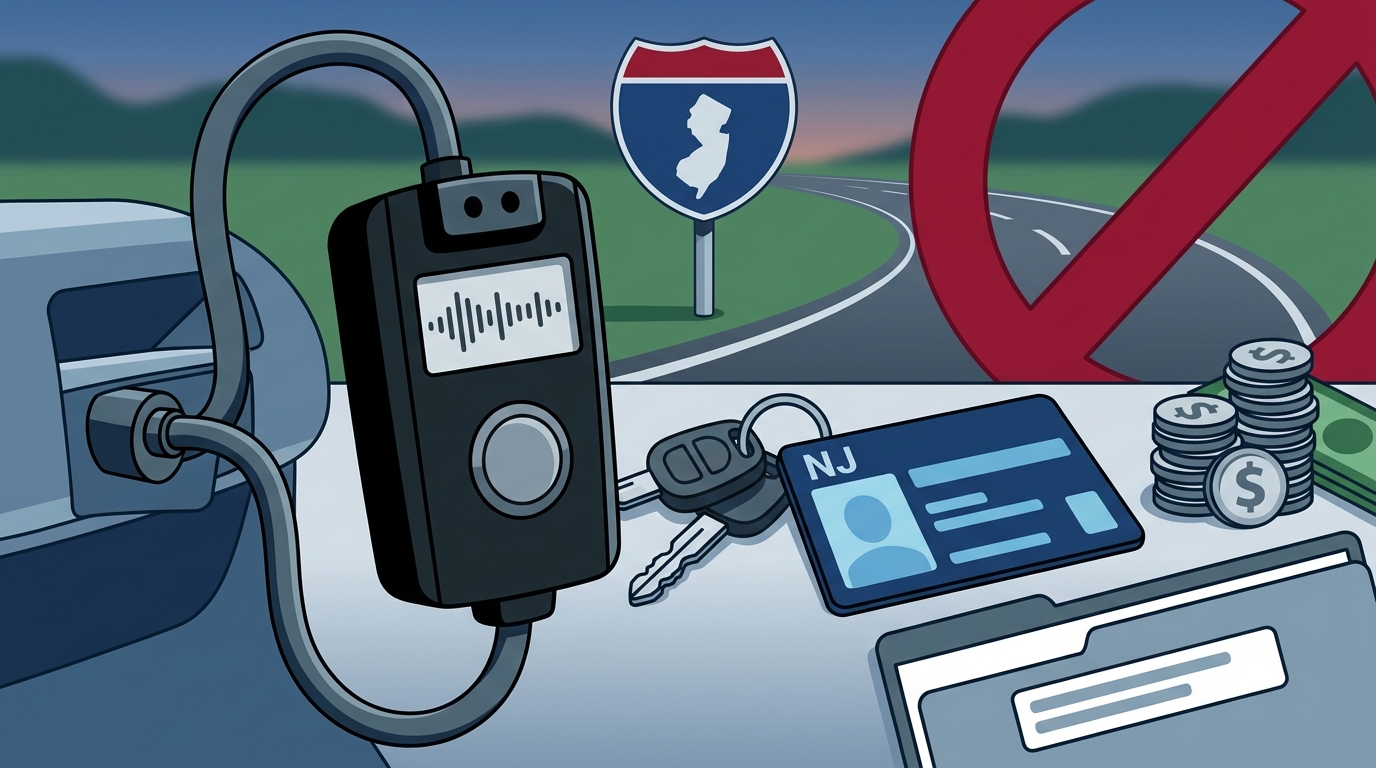
If your BAC is 0.10% or higher, the license suspension increases to four to six months. You will also be required to install an Ignition Interlock Device (IID) in your vehicle for a period of nine months to one year. The cost of this device, along with monthly monitoring fees, adds a substantial financial burden to an already stressful situation.
Immediate Steps After a DUI Arrest
The moments following your arrest are critical. What you say, or do not say, can determine the outcome of your case. The first and most important step is to exercise your right to remain silent. Do not answer questions about how much you drank, where you were going, or how you feel. Anything you say can be used against you in court.
Second, you must request a hearing with the New Jersey Motor Vehicle Commission to contest your license suspension. You have only 30 days from the date of your arrest to file this request. If you miss this deadline, your license suspension becomes automatic, and you lose the opportunity to challenge the administrative aspect of the charge.
Third, hire an experienced criminal defense attorney immediately. The Law Office of Edward Appel specializes in defending first-time DUI offenders. Our founder, Edward G. Appel, has over 35 years of experience and has personally represented more than 15,000 clients. Edward Appel's legal background includes extensive training in DUI defense and municipal court practice, making him uniquely qualified to navigate the complexities of your case.
Challenging the Traffic Stop and Probable Cause
One of the most effective ways to defend against a DUI charge is to challenge the legality of the initial traffic stop. Under the Fourth Amendment, police must have a reasonable suspicion that a traffic violation or crime has occurred before stopping a vehicle. If the officer lacked probable cause, any evidence gathered during the stop, including breath test results, may be suppressed.
Common reasons for illegal stops include pretextual stops without a valid reason, such as a minor equipment violation that is not actually present. If you believe your rights were violated, your attorney can file a motion to suppress evidence. This motion argues that the stop was unlawful and that the subsequent arrest was invalid.
Additionally, the officer must have probable cause to believe you were driving under the influence. This is typically established through field sobriety tests (FSTs) and the smell of alcohol. However, FSTs are subjective and can be influenced by medical conditions, fatigue, or nervousness. Challenging the reliability of these tests can weaken the prosecution's case significantly.
Challenging Breath Test Reliability
New Jersey relies heavily on breath test results, specifically the Alcotest 7110 MKIII, to prove BAC levels. However, these devices are not infallible. There are numerous technical and procedural errors that can render a breath test result invalid.
First, the device must be calibrated and maintained according to strict state guidelines. If the calibration records are missing or show discrepancies, the results can be challenged. Second, the officer must follow proper protocol during the test, including a 20-minute observation period to ensure no food or drink is consumed. Any deviation from this protocol can compromise the accuracy of the result.
Furthermore, certain medical conditions, such as acid reflux or diabetes, can produce mouth alcohol or ketones that interfere with the breath test. If you have a known medical condition, your attorney can request a blood test to verify your BAC, as blood tests are generally more accurate than breath tests. Criminal defense strategies often include scrutinizing the technical evidence to find these critical flaws.
Mitigating Penalties and License Suspension
Even if the evidence against you is strong, there are ways to mitigate the penalties. For first-time offenders, the court may consider factors such as your character, employment history, and community involvement. Demonstrating that you are a responsible citizen can sometimes lead to more favorable outcomes.
In some cases, your attorney may negotiate a plea bargain to a lesser charge, such as reckless driving. While this does not result in a DUI conviction, it still carries penalties, including points on your license and potential insurance increases. However, it avoids the stigma and long-term consequences of a DUI record.
Another option is to seek a diversion program, such as the Pre-Trial Intervention (PTI) program, if you are eligible. PTI allows first-time offenders to complete a period of supervision and community service in exchange for the dismissal of charges. This is a valuable opportunity to avoid a criminal record entirely.
Finally, if you are required to install an Ignition Interlock Device, you may be able to reduce the installation period by participating in alcohol education programs. These programs demonstrate your commitment to sobriety and responsible driving, which the court may view favorably.
Key Takeaways
- Zero Tolerance: New Jersey has strict DUI laws, and first-time offenders face mandatory license suspensions and fines.
- 30-Day Deadline: You must request a DMV hearing within 30 days of arrest to contest license suspension.
- Right to Remain Silent: Do not answer questions to police after arrest; invoke your right to an attorney immediately.
- Technical Defenses: Breath test results can be challenged based on calibration errors and procedural violations.
- Experienced Counsel: An attorney with over 35 years of experience, like Edward Appel, can identify critical weaknesses in the state's case.
- Plea Bargains: Negotiating a lesser charge may avoid a DUI conviction and its long-term consequences.
- IID Requirements: High-bail offenses require Ignition Interlock Device installation for 9-12 months.
Frequently Asked Questions
What is the penalty for a first-time DUI in NJ?
A first-time DUI with a BAC between 0.08% and 0.10% results in a three-month license suspension and fines of $300 to $500. If the BAC is 0.10% or higher, the suspension increases to four to six months, and an Ignition Interlock Device is required.
Can I keep my license after a first DUI arrest?
You can request a hearing with the New Jersey Motor Vehicle Commission to contest the suspension. However, if you are convicted, you will likely face a mandatory suspension. An attorney can help challenge the evidence to potentially avoid conviction.
How long does a DUI stay on my record in NJ?
A DUI conviction remains on your driving record for 10 years in New Jersey. It can also appear on your criminal record, affecting employment and professional licensing opportunities.
What happens if I refuse a breath test?
Refusing a breath test in New Jersey results in an automatic license suspension of seven to nine months and a fine. This penalty is separate from any DUI conviction penalties.
Do I need a lawyer for a first-time DUI?
Yes, hiring an experienced DUI attorney is crucial. They can challenge the legality of the stop, the accuracy of the breath test, and negotiate for reduced penalties or alternative charges.
Can a first-time DUI be expunged?
DUI convictions in New Jersey generally cannot be expunged. However, some lesser charges, such as reckless driving, may be eligible for expungement after a waiting period.
What is the cost of an Ignition Interlock Device?
The cost varies by provider but typically includes an installation fee of $70 to $150 and monthly monitoring fees of $80 to $120. This cost is the responsibility of the offender.
How does a DUI affect my insurance?
A DUI conviction can cause your insurance premiums to increase significantly, often by 50% to 100% or more, for several years. You may also be required to file an SR-22 form.
Contact a First-Time DUI Attorney
If you are facing a first-time DUI charge in New Jersey, do not wait. The consequences of a conviction can impact your life for years. Contact the Law Office of Edward Appel today for a free consultation. Our team is dedicated to protecting your rights and fighting for the best possible outcome. Call us at 856-856-2373 or visit our contact page to schedule your appointment.