

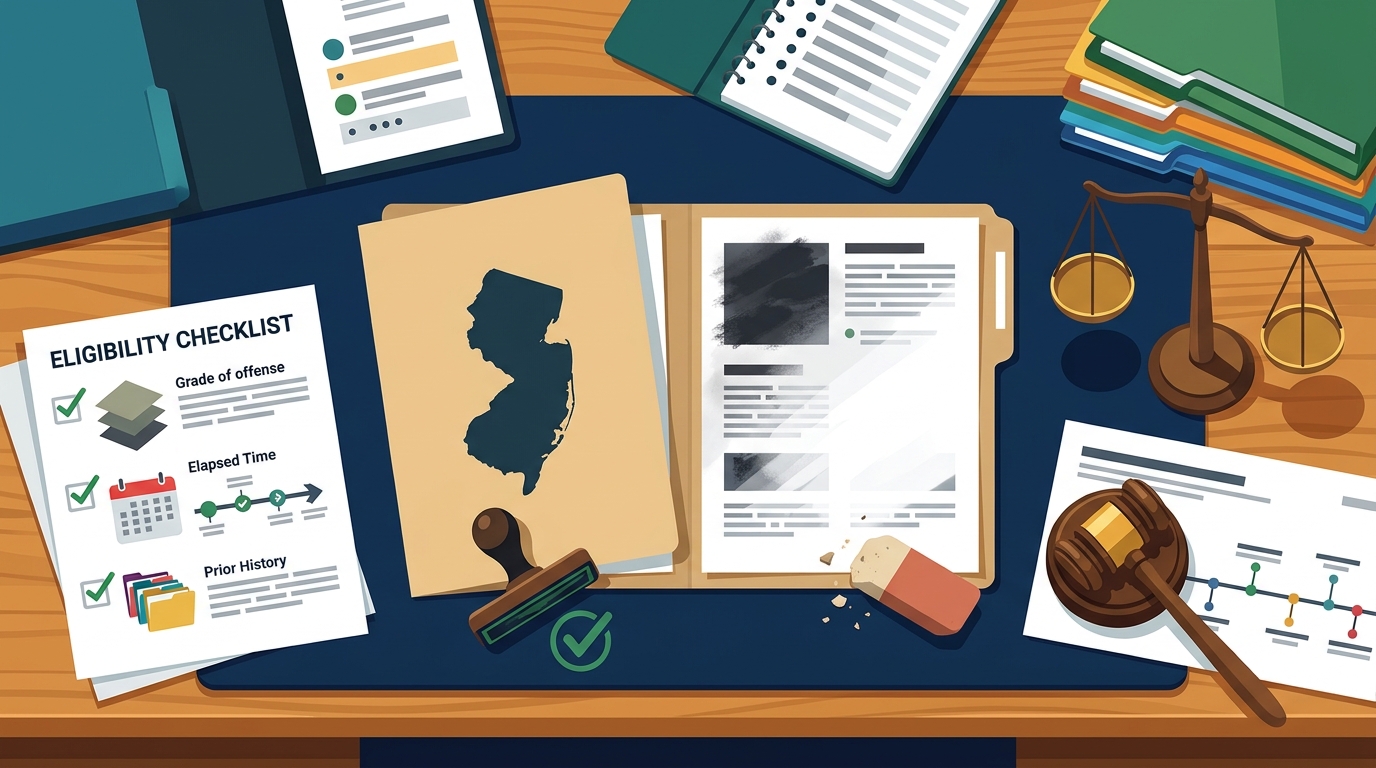
Yes, you can get a past conviction expunged in New Jersey if you meet specific statutory requirements. Eligibility depends on the grade of the offense, the time elapsed since the conviction, and whether you have other criminal history. The Law Office of Edward Appel helps clients navigate these complex rules to restore their civil rights and clear their records.
Understanding the Legal Definition of Expungement
Expungement is the legal process of sealing or destroying criminal records so they are no longer accessible to the public or most employers. In New Jersey, this is governed by N.J.S.A. 2C:52-1 et seq. When a record is expunged, the individual is generally treated as if the conviction never occurred for most purposes, such as job applications and housing inquiries. However, certain agencies, like law enforcement and the courts, may still have access to the sealed records for specific investigative purposes.
Eligibility Based on Offense Grade
New Jersey law categorizes offenses into indictable crimes and disorderly persons offenses, each with different waiting periods for expungement. For indictable crimes, the waiting period is typically five years after the completion of the sentence for a single conviction. If you have multiple indictable convictions, the waiting period extends to ten years after the completion of the last sentence. Disorderly persons offenses, which are less severe, often have shorter waiting periods or may be eligible for immediate expungement in certain circumstances, such as when the charge is dismissed.
The Impact of Multiple Convictions
Having multiple convictions significantly affects your eligibility timeline. If you have two or more indictable convictions, you must wait ten years after the completion of your last sentence before applying. This rule applies even if the offenses occurred in different counties or at different times. The presence of a prior conviction can also disqualify you from certain alternative programs, such as Pre-Trial Intervention (PTI), which is a separate but related legal mechanism for avoiding a conviction. Understanding the distinction between expungement and PTI is crucial for building a comprehensive defense strategy.
Exceptions and Ineligible Offenses
Not all crimes are eligible for expungement in New Jersey. Certain serious offenses, including first-degree crimes involving sexual assault, murder, and certain drug distribution charges, are generally not eligible for expungement. Additionally, if you have a prior conviction for a crime that is not eligible for expungement, it may block the expungement of other eligible convictions. It is essential to review your entire criminal history to determine if any ineligible offenses are present. The Law Office of Edward Appel provides a thorough review of your record to identify these potential barriers.
The Application Process and Required Documentation
Applying for expungement requires submitting a petition to the court where the conviction occurred. You must include certified copies of your criminal history from the New Jersey State Police and the FBI. The court will review your petition and may hold a hearing if the prosecutor objects. The process can take several months, so it is important to file accurately and completely. Errors in the application, such as missing documents or incorrect dates, can delay the process significantly. Professional guidance ensures that your petition meets all statutory requirements.
Key Takeaways
- Expungement seals your criminal record, making it inaccessible to most employers and the public.
- Single indictable convictions are eligible after a five-year waiting period.
- Multiple indictable convictions require a ten-year waiting period after the last sentence.
- Certain serious offenses, such as first-degree sexual assault, are not eligible for expungement.
- You must submit certified criminal history reports from the NJ State Police and FBI.
- The Law Office of Edward Appel offers free consultations to assess your eligibility.
Frequently Asked Questions
How long does the expungement process take in New Jersey?
The process typically takes three to six months, depending on the court's backlog and whether the prosecutor objects. If there are no objections, the court may grant the petition more quickly. Delays can occur if documentation is incomplete or if the court schedules a hearing.
Can I get a DWI conviction expunged?
DWI is a motor vehicle offense, not a criminal offense, so it is not expunged in the traditional sense. However, you may be able to have the record sealed or restricted under specific circumstances. Consult with an attorney to determine the best option for your specific DWI record.
What happens if my expungement petition is denied?
If your petition is denied, you may be able to reapply after a certain period, depending on the reason for denial. In some cases, you can appeal the denial to a higher court. An attorney can help you understand the grounds for denial and explore your options.
Do I need a lawyer to file for expungement?
While you can file for expungement pro se, it is highly recommended to use an attorney. The legal requirements are complex, and errors can lead to denial. An experienced criminal defense attorney can ensure your petition is properly prepared and filed.
Will an expunged record affect my immigration status?
Expungement does not automatically remove a conviction for immigration purposes. Immigration law is separate from state criminal law, and an expunged conviction may still be considered in immigration proceedings. Consult with an immigration attorney for advice specific to your situation.
Conclusion
Clearing your criminal record in New Jersey is a powerful step toward rebuilding your life. Understanding the eligibility requirements is the first step in this process. The Law Office of Edward Appel has over 35 years of experience in New Jersey criminal defense and can help you determine if you qualify for expungement. To plan your next steps, contact our team for a free, confidential consultation to discuss your options. Learn more: contact.