

What Should You Know Before Hiring a Lawyer for a Restraining Order Case?
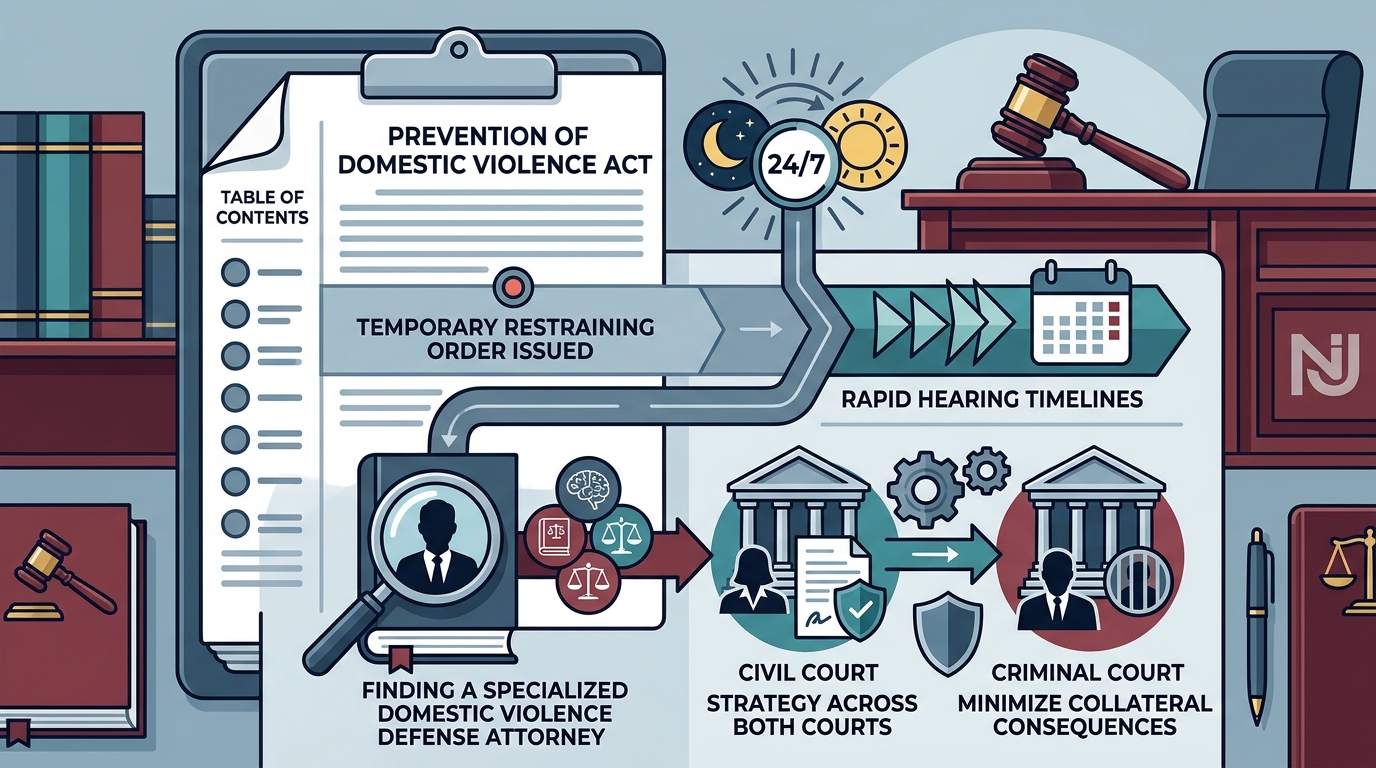
Before hiring a lawyer for a New Jersey restraining order case, you must understand that the Prevention of Domestic Violence Act allows judges to issue temporary orders at any hour. You need an attorney who specializes in domestic violence defense, understands the rapid hearing timelines, and can coordinate your strategy across both civil and criminal courts to protect your rights and minimize collateral consequences.
Understanding New Jersey Restraining Order Law
New Jersey operates under the Prevention of Domestic Violence Act, which sets unique procedures and standards that differ from many other states. A restraining order is a civil court order that restricts the behavior of one party to protect another from domestic violence. The law allows judges to issue temporary restraining orders at any hour, including nights and weekends, which means the process can begin immediately after an incident.
Final restraining order hearings are scheduled quickly, often within days of the temporary order. This rapid timeline creates significant stress and uncertainty for the respondent. The judge will evaluate the evidence to determine if a final order is necessary to protect the victim. Understanding these procedural rules is the first step in building an effective defense strategy.
Immediate Risks and Collateral Consequences
Outcomes in these cases may affect housing, parenting time, firearms possession, and employment. A final restraining order can have lasting implications for your daily life and future opportunities. For example, if you are a commercial driver or hold a professional license, a domestic violence finding can trigger background check failures or mandatory disclosures. You must consider these collateral consequences when evaluating your defense options.
The Law Office of Edward Appel helps clients understand what is happening and what options they have under New Jersey law. Whether you are facing a temporary restraining order or a final hearing, early action often sets the tone for the entire case. Prompt legal guidance helps you avoid missteps, comply with restrictions, and document your side of the story effectively.
Choosing a Specialist in Domestic Violence Defense
When selecting an attorney, look for a lawyer who specializes in domestic violence defense rather than a general criminal defense practitioner. A specialist understands the specific nuances of the Prevention of Domestic Violence Act and the local court practices in New Jersey. They can prepare you for each step, explain the rules in plain terms, and work to protect your rights while minimizing collateral consequences.
Effective representation involves preparing for the final restraining order hearing to challenge allegations, present witnesses, and introduce relevant communications or records. An experienced attorney will coordinate defense planning for both the civil restraining order process and any related criminal matters. This dual focus ensures that your statements in one forum do not inadvertently harm your position in the other.
Coordinating with Related Criminal Charges
Domestic violence allegations often move quickly and can affect your freedom, family, and future. Protective orders, criminal charges, and immediate court deadlines often arrive at the same time. Coordinating defense efforts with any related criminal charges can guard against unintended admissions and helps align your overall strategy. For instance, a statement made during a police interview for an assault charge could be used against you in the civil restraining order hearing.
At the Law Office of Edward Appel, we help you understand the process and make informed choices about negotiation and trial preparation. We focus on de-escalating risk, negotiating from strength, and preparing for trial when necessary. This approach ensures that your defense is consistent across all legal proceedings, protecting your record and reducing stress during a difficult time.
Key Takeaways
- New Jersey judges can issue temporary restraining orders at any hour, requiring immediate legal response.
- Final restraining order hearings are scheduled quickly, often within days of the initial incident.
- Collateral consequences include impacts on housing, parenting time, firearms possession, and employment.
- Choose an attorney who specializes in domestic violence defense and understands the Prevention of Domestic Violence Act.
- Coordinate your defense strategy across both civil and criminal courts to avoid unintended admissions.
- Early action helps preserve evidence, comply with restrictions, and document your side of the story.
- Effective representation involves challenging allegations, presenting witnesses, and introducing relevant records.
Frequently Asked Questions
Can a judge issue a restraining order at night or on weekends?
Yes, New Jersey judges can issue temporary restraining orders at any hour, including nights and weekends. This means the process can begin immediately after an incident, requiring prompt legal attention.
How quickly is a final restraining order hearing scheduled?
Final restraining order hearings are scheduled quickly, often within days of the temporary order. This rapid timeline creates significant stress and uncertainty for the respondent.
What are the collateral consequences of a final restraining order?
Outcomes may affect housing, parenting time, firearms possession, and employment. A final order can have lasting implications for your daily life and future opportunities.
Should I hire a general criminal defense lawyer or a domestic violence specialist?
You should hire a lawyer who specializes in domestic violence defense. A specialist understands the specific nuances of the Prevention of Domestic Violence Act and local court practices.
How does a restraining order case interact with criminal charges?
Protective orders, criminal charges, and immediate court deadlines often arrive at the same time. Coordinating defense efforts with any related criminal charges can guard against unintended admissions and helps align your overall strategy.
What should I do immediately after receiving a restraining order?
Contact a domestic violence defense attorney immediately. Early action often sets the tone for the entire case, helps preserve evidence, and supports a measured strategy.
Can I negotiate a resolution in a restraining order case?
Yes, with timely counsel, you can make informed choices about negotiation and trial preparation. An experienced attorney will help you evaluate options and work toward a result that limits consequences.
Next Steps for Your Defense
If you have paperwork in hand, do not wait. Early action often sets the tone for the entire case, helps preserve evidence, and supports a measured strategy. The Law Office of Edward Appel provides clear guidance and steady advocacy for individuals facing domestic violence allegations in New Jersey. We help you understand the process, prepare for each step, and work to protect your rights while minimizing collateral consequences. To discuss your situation and next steps, for a confidential consultation.