

Challenging Breathalyzer and Field Sobriety Evidence in NJ DUI Cases
In New Jersey, DUI cases often hinge on the reliability of breathalyzer readings and field sobriety tests. Defense attorneys can challenge these results by identifying calibration errors, improper administration, or environmental factors that compromise accuracy. The Law Office of Edward Appel helps clients evaluate whether the state's evidence meets the strict standards required for a conviction.
Common Breathalyzer Deficiencies in New Jersey
Many breathalyzer challenges focus on the maintenance and operation of the testing device. A breathalyzer is a chemical testing instrument that measures alcohol concentration in a person's breath. In New Jersey, the state uses the Alcotest 9510, which must be certified and maintained according to strict protocols. If the device was not calibrated correctly, or if the operator lacked proper certification, the results may be inadmissible. For example, a failure to perform a required solution check before testing can invalidate the entire reading. The Law Office of Edward Appel reviews Alcotest records and calibration logs to identify these critical gaps in the state's evidence.
Field Sobriety Test Limitations and Errors
Field sobriety tests (FSTs) are subjective observations used by officers to gauge impairment. A field sobriety test is a series of physical and cognitive exercises, such as the horizontal gaze nystagmus (HGN) or one-leg stand. These tests are not scientific measurements and are heavily influenced by environmental conditions. Factors like uneven pavement, poor lighting, or a suspect's physical injuries can cause a person to fail these tests even when sober. Officers are trained to look for specific clues, but their interpretation is often inconsistent. By analyzing body-worn camera footage, attorneys can highlight discrepancies between the officer's report and the actual performance of the tests.
Physiological and Medical Interferences
Medical conditions and medications can produce false-positive breathalyzer results or affect physical coordination. A false positive is a test result that indicates impairment when the subject is actually sober. Conditions such as gastroesophageal reflux disease (GERD) can cause alcohol to remain in the stomach and be exhaled, leading to an artificially high BAC reading. Similarly, certain medications or neurological conditions can impair balance and reaction time, mimicking the signs of intoxication. The Law Office of Edward Appel works with medical experts to document these interferences, providing a scientific basis for challenging the state's proof of impairment.
Procedural Violations and Officer Conduct
The legality of the evidence depends on whether the stop and arrest followed constitutional standards. A procedural violation is a failure by law enforcement to adhere to legal requirements during a traffic stop or arrest. If an officer lacked reasonable suspicion to initiate the stop or probable cause to request a breath test, the resulting evidence may be suppressed. Additionally, New Jersey law requires specific warnings and procedures before administering a breath test. Any deviation from these protocols, such as failing to observe the suspect for the required observation period, can undermine the reliability of the results. Attorneys scrutinize the timeline of events to identify any procedural missteps that could lead to a dismissal.
Strategic Defense Approaches for DUI Charges
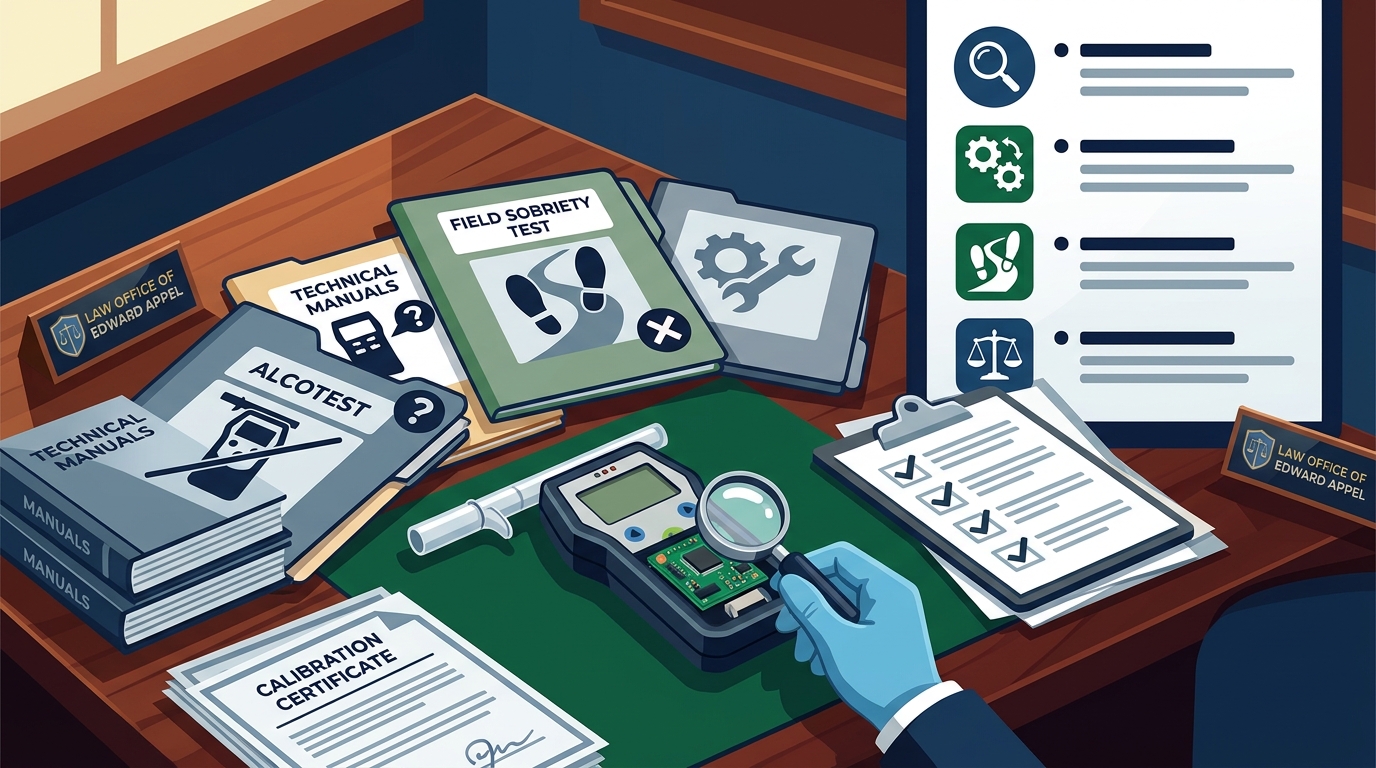
Effective defense strategies combine technical challenges with a thorough review of the entire case file. A DUI defense strategy is a legal plan designed to challenge the state's evidence and protect the client's rights. This involves requesting discovery, including video footage, police reports, and laboratory records. By cross-examining the arresting officer and the state's breath test expert, attorneys can expose inconsistencies and weaknesses in the prosecution's case. The Law Office of Edward Appel focuses on building a comprehensive defense that addresses both the scientific and procedural aspects of the charge, aiming for the most favorable outcome possible.
Key Takeaways
- Breathalyzer results can be challenged through calibration errors and operator certification issues.
- Field sobriety tests are subjective and can be affected by environmental and physical factors.
- Medical conditions like GERD can cause false-positive breath test readings.
- Procedural violations during the stop or arrest can lead to evidence suppression.
- Reviewing body-warm camera footage is essential for identifying inconsistencies in officer reports.
- Early legal intervention helps preserve evidence and build a strong defense strategy.
Frequently Asked Questions
Can I refuse a breathalyzer test in New Jersey?
Yes, you can refuse a breath test, but refusal carries its own penalties, including a mandatory license suspension. The consequences of refusal are often more severe than those for a low BAC reading.
Are field sobriety tests scientific?
No, field sobriety tests are not scientific measurements. They are subjective observations that can be influenced by many factors other than alcohol impairment.
What is the Alcotest 9510?
The Alcotest 9510 is the breath testing device used in New Jersey. It must be certified and maintained according to state regulations to ensure accurate results.
How can medical conditions affect a DUI case?
Medical conditions can cause false-positive breath test results or impair physical coordination, mimicking the signs of intoxication. Documenting these conditions is crucial for a strong defense.
Why is body-worn camera footage important?
Body-worn camera footage provides an objective record of the stop and tests. It can reveal discrepancies between the officer's report and the actual events, supporting a defense challenge.
What should I do if I am arrested for DUI?
Contact a DUI defense attorney immediately. Early legal guidance helps preserve evidence, manage court dates, and develop a strategy to protect your license and record.
Protect Your Rights with Expert Legal Guidance
Navigating a DUI charge in New Jersey requires a detailed understanding of the evidence and the law. The Law Office of Edward Appel provides the expertise needed to challenge breathalyzer and field sobriety test results effectively. To discuss your case and explore your options, for a confidential consultation.