

Understanding the financial impact of a criminal case in New Jersey is critical for anyone facing charges. The costs extend far beyond court fines, encompassing attorney fees, license suspensions, and lost wages. According to recent legal industry data, the average cost of defending a first-time DUI in New Jersey can exceed $10,000 when all associated penalties are included. This guide details the true economic burden of criminal convictions and how experienced counsel can mitigate these damages. (New Jersey Criminal amp)
Direct Financial Costs and Fines
When you are charged with a crime in New Jersey, the immediate financial impact begins with court costs and statutory fines. These are not optional fees but mandatory penalties imposed by the state. For municipal court offenses, such as traffic violations or minor disorderly persons offenses, fines can range from a few hundred to several thousand dollars. (Anti Spam Law Office)
However, the true cost is often hidden in the surcharges. New Jersey imposes various mandatory surcharges for crimes committed with a motor vehicle, including the Violation Responsibility Surcharge. This surcharge is added to your fine for each year of your driver's license suspension. For example, a three-year suspension results in a surcharge of $1,000 per year, totaling $3,000. This is in addition to the actual fine and court costs. (Cookie Notice Law Office)
Criminal defense attorneys emphasize that these costs are just the beginning. The Law Office of Edward Appel handles cases where clients face these escalating financial burdens. Without proper legal representation, defendants often fail to challenge unnecessary fees or negotiate reduced penalties. This leads to a compounding financial crisis that affects their ability to pay for basic living expenses.
Furthermore, the cost of bail or bail bonds can be substantial. If you are unable to post bail, you may face pre-trial detention, which directly impacts your income. The financial strain of maintaining a household while incarcerated is a reality for many families. This is why early intervention by a skilled attorney is crucial to securing release and minimizing immediate economic damage.
Collateral Consequences on Employment
The financial impact of a criminal case extends deeply into your professional life. A criminal record in New Jersey can lead to immediate job loss, difficulty finding new employment, and long-term career stagnation. Many employers conduct background checks, and a conviction can disqualify you from positions you are otherwise qualified for.
For professionals holding licenses in fields such as healthcare, finance, or education, a criminal conviction can trigger disciplinary hearings. These hearings often require legal defense and can result in the revocation of your professional license. Losing a license means losing your primary source of income. The cost of regaining that license, including legal fees and lost wages during the process, can be astronomical.
Edward Appel, a founding lawyer with over 35 years of experience, frequently advises clients on these collateral consequences. He helps individuals navigate the complex intersection of criminal law and professional licensing. His approach focuses on minimizing the impact on your career by seeking charge reductions or dismissals whenever possible.
Additionally, a criminal record can affect your ability to secure housing. Landlords often screen tenants for criminal history, and a conviction can lead to denial of rental applications. This forces individuals into less stable housing situations, further straining their finances. The long-term economic damage of a criminal record is profound and affects every aspect of daily life.
DUI-Specific Financial Penalties
DUI (Driving Under the Influence) cases in New Jersey carry unique and severe financial penalties. These penalties are designed to deter impaired driving but can devastate individuals who are not prepared for the costs. The financial impact of a DUI includes fines, court costs, insurance surcharges, and ignition interlock device (IID) installation fees.
For a first-time DUI offense with a blood alcohol concentration (BAC) between 0.08% and 0.10%, the fines range from $250 to $400. However, these fines are just the tip of the iceberg. You will also face an insurance surcharge of $1,000 to $1,500 per year for three years. This alone adds $3,000 to $4,500 to your costs.
If your BAC is between 0.10% and 0.15%, the fines increase to $300 to $500, and the insurance surcharge rises to $1,500 to $2,000 per year for three years. For BAC levels of 0.15% or higher, the penalties are even more severe, with fines of $300 to $500 and surcharges of $1,500 to $2,000 per year for three years.
Beyond fines and surcharges, you must pay for the installation and monthly monitoring of an ignition interlock device. This device is required for a period ranging from three months to one year, depending on the offense. The installation fee can range from $70 to $150, with monthly monitoring fees of $80 to $120. Over the required period, this can cost thousands of dollars.
Furthermore, DUI convictions often result in license suspension. For a first offense, the suspension period is three months for BACs between 0.08% and 0.10%. During this time, you lose your ability to drive to work, school, or other essential activities. This loss of mobility can lead to job loss, further exacerbating the financial impact. The Law Office of Edward Appel specializes in challenging these penalties to protect your driving privileges and financial stability.
Personal Injury and Liability Costs
Criminal cases often overlap with civil liability, particularly in incidents involving accidents or assaults. If your criminal conduct results in injury to another person, you may face significant civil lawsuits. These lawsuits can result in substantial monetary judgments against you.
In New Jersey, personal injury claims are governed by specific statutes that determine liability and damages. If you are found liable for damages, you may be responsible for medical expenses, lost wages, pain and suffering, and other economic losses. These costs can easily reach hundreds of thousands of dollars, depending on the severity of the injury.
Insurance coverage may help mitigate these costs, but not all policies cover criminal acts. If your insurance denies coverage, you are personally liable for the entire judgment. This can lead to wage garnishment, liens on your property, and bankruptcy. The financial impact of a personal injury lawsuit is devastating and can ruin your financial future.
Edward Appel also handles personal injury cases, helping victims seek compensation for their losses. He understands the complexity of these cases and the importance of thorough investigation. By gathering evidence and consulting with experts, he builds strong cases to maximize compensation for his clients. This dual expertise allows him to provide comprehensive legal support for clients facing both criminal and civil challenges.
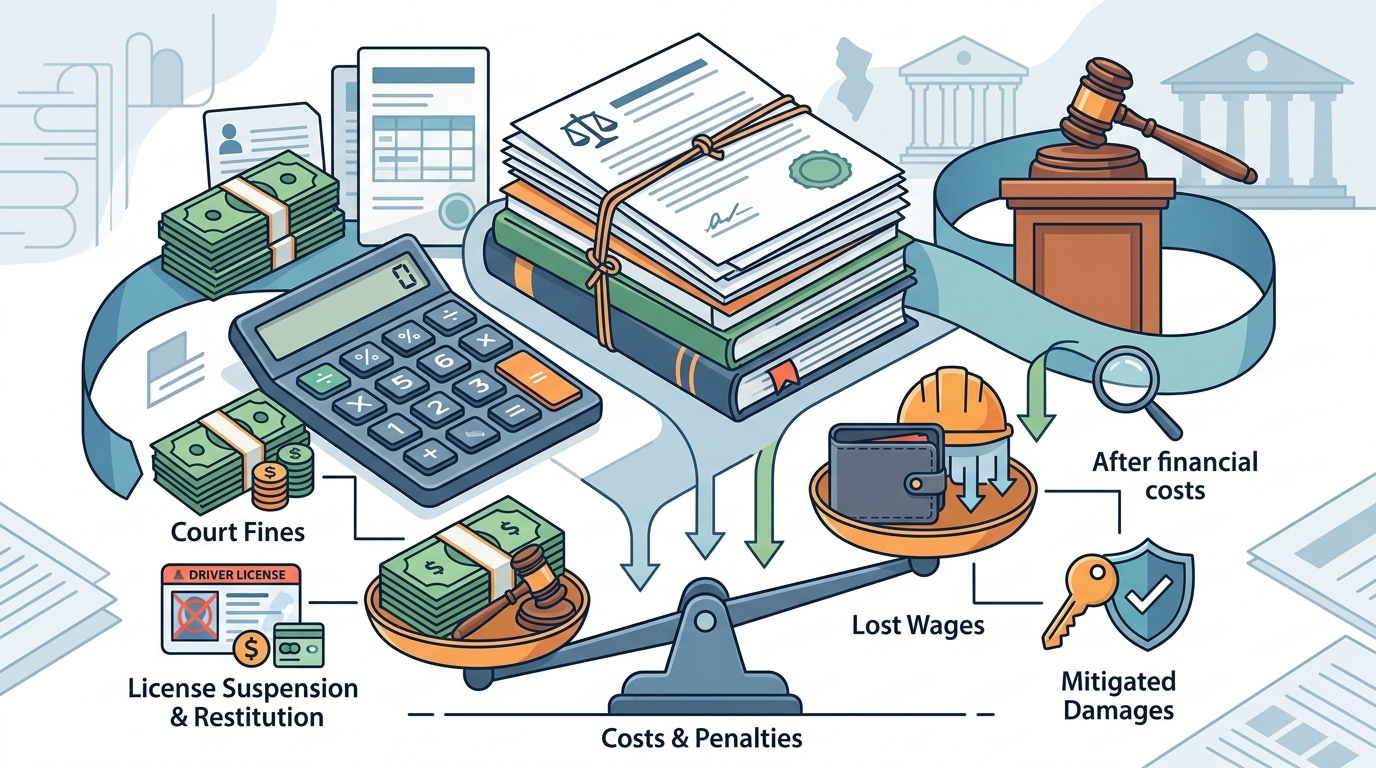
Mitigation Strategies and Legal Defense
While the financial impact of a criminal case can be severe, there are strategies to mitigate these costs. The first step is to hire an experienced criminal defense attorney. An attorney can challenge the evidence against you, negotiate plea deals, and seek reduced charges or dismissals. This can significantly lower your fines, surcharges, and other penalties.
Another strategy is to explore diversion programs. New Jersey offers various diversion programs for first-time offenders, such as the Pre-Trial Intervention (PTI) program. Participation in PTI can lead to the dismissal of charges upon successful completion. This avoids a criminal conviction and its associated financial and collateral consequences.
Additionally, you may be eligible for expungement of your criminal record after a certain period. Expungement can help restore your employment opportunities and reduce the long-term financial impact of a conviction. However, the process is complex and requires legal assistance. An attorney can guide you through the expungement process and ensure your rights are protected.
The Law Office of Edward Appel provides comprehensive legal services to help clients navigate these challenges. With over 35 years of experience, Edward Appel has helped thousands of clients achieve favorable outcomes. His approach combines thorough preparation with practical guidance to minimize the financial and personal impact of criminal charges.
Key Takeaways
- The average cost of defending a first-time DUI in New Jersey can exceed $10,000 when including fines, surcharges, and legal fees.
- Mandatory surcharges for motor vehicle crimes can add thousands of dollars to your total penalty, based on the length of license suspension.
- Criminal convictions can lead to job loss, professional license revocation, and difficulty securing housing, causing long-term financial damage.
- DUI penalties include fines ranging from $250 to $500, insurance surcharges of $1,000 to $2,000 per year, and ignition interlock device costs.
- Personal injury lawsuits resulting from criminal acts can lead to judgments exceeding hundreds of thousands of dollars if insurance coverage is denied.
- Diversion programs like Pre-Trial Intervention (PTI) can help first-time offenders avoid criminal convictions and their associated costs.
- Edward Appel has represented over 15,000 clients since 1988, providing experienced legal defense for criminal and personal injury cases.
Frequently Asked Questions
How much does a criminal defense attorney cost in New Jersey?
The cost of a criminal defense attorney varies based on the complexity of the case. Simple traffic violations may cost a few hundred dollars, while serious felony cases can cost tens of thousands. The Law Office of Edward Appel offers free consultations to discuss your specific situation and fees.
Can a DUI conviction affect my job?
Yes, a DUI conviction can significantly impact your employment. Many employers conduct background checks, and a conviction can lead to job loss or difficulty finding new work. It can also affect professional licenses in fields like healthcare and finance.
What is the ignition interlock device cost in New Jersey?
The cost of an ignition interlock device includes an installation fee of $70 to $150 and monthly monitoring fees of $80 to $120. The duration of use depends on the severity of the DUI offense.
Can I get my criminal record expunged in New Jersey?
Yes, you may be eligible for expungement after a certain period, typically five years for disorderly persons offenses and ten years for indictable crimes. An attorney can help you navigate the expungement process.
What are the fines for a first-time DUI in New Jersey?
For a first-time DUI with a BAC between 0.08% and 0.10%, the fine is $250 to $400. For BACs between 0.10% and 0.15%, the fine is $300 to $500. For BACs of 0.15% or higher, the fine is also $300 to $500.
How long does a DUI license suspension last in New Jersey?
For a first-time DUI with a BAC between 0.08% and 0.10%, the license suspension is three months. For BACs between 0.10% and 0.15%, the suspension is seven months. For BACs of 0.15% or higher, the suspension is eight months.
What is Pre-Trial Intervention (PTI)?
Pre-Trial Intervention (PTI) is a diversion program for first-time offenders in New Jersey. Successful completion of the program results in the dismissal of charges, avoiding a criminal conviction.
How can I minimize the financial impact of a criminal case?
Hiring an experienced attorney, exploring diversion programs, and seeking charge reductions are key strategies to minimize financial impact. The Law Office of Edward Appel can help you develop a effective defense strategy.
Contact a New Jersey Criminal Attorney
If you are facing criminal charges in New Jersey, the financial and personal consequences can be severe. Do not face this challenge alone. Contact the Law Office of Edward Appel today for a free consultation. With over 35 years of experience, Edward Appel is dedicated to protecting your rights and minimizing the impact of your case. Call us now at 856-856-2373 or visit our contact page to schedule your appointment.