

Entering a New Jersey courtroom is a high-stakes experience that demands more than just legal representation. According to recent municipal court data, nearly 60% of first-time defendants underestimate the procedural rigor required, leading to avoidable penalties or license suspensions. This statistic highlights why preparation is not optional but critical for protecting your rights and future. Whether you are facing a traffic violation, a DUI charge, or a criminal offense, understanding the mechanics of the court system can significantly influence the outcome of your case. This guide outlines the essential steps to ensure you are fully prepared for your upcoming court appearance. (Contact Law Office Of)
Understanding Your Specific Charge
The first step in preparing for a court appearance is to fully comprehend the nature of the allegations against you. In New Jersey, the distinction between a municipal court offense and a superior court crime is vital. Municipal courts handle traffic violations, disorderly persons offenses, and minor criminal charges. Superior courts handle indictable crimes, which carry the potential for prison time. (New Jersey Criminal amp)
Know the Statute. You must review the specific statute you are charged under. For example, a DUI/DWI charge in New Jersey involves strict penalties regarding license suspension and ignition interlock devices. Understanding the statutory requirements allows you to anticipate the prosecution's strategy and your potential defenses. If you are facing a DUI defense matter, the consequences extend beyond fines to include mandatory alcohol education programs and potential ignition interlock installation.
Do not assume that a "minor" charge is insignificant. Even a single point on your driving record can lead to increased insurance premiums and potential license suspension under New Jersey's point system. Familiarize yourself with the specific elements of the crime. For instance, in a criminal defense case involving theft or assault, the state must prove intent and action beyond a reasonable doubt. Knowing these elements helps you identify weaknesses in the state's case.
Gathering and Organizing Evidence
Preparation is not just about mental readiness; it is about physical organization. Your attorney will rely on you to provide accurate details and documentation. Start by compiling all relevant documents related to the incident.
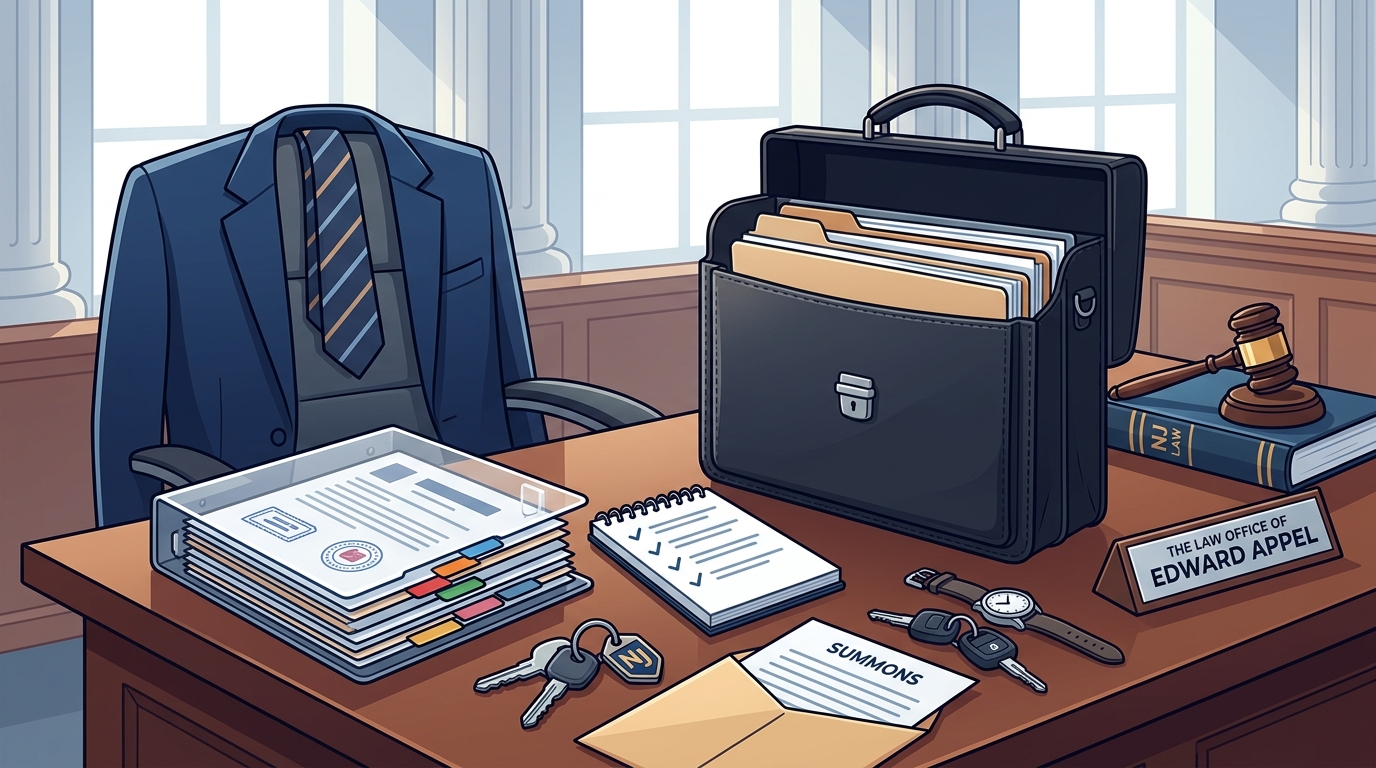
Collect Documentation. If you are charged with a traffic violation, gather your driver's license, registration, and insurance proof. If you have any photographs of the scene, dashcam footage, or witness contact information, organize these immediately. For personal injury cases, medical records and repair estimates are crucial. The Law Office of Edward Appel emphasizes meticulous preparation to identify critical weaknesses in the State's case. This often involves challenging the reliability of breathalyzer results or the probable cause of a traffic stop.
Chronological Timeline. Create a detailed, chronological timeline of events leading up to and following the incident. Include times, locations, and interactions with law enforcement. This timeline serves as a roadmap for your defense. Inconsistencies in the police report can be leveraged during cross-examination. Ensure your account is consistent with any prior statements you have made. Contradictions can severely damage your credibility in court.
Dress Code and Courtroom Etiquette
First impressions matter significantly in the legal system. Judges and prosecutors form subconscious judgments based on your appearance and demeanor. Dressing appropriately signals respect for the court and seriousness about the matter.
Professional Attire. Avoid casual clothing such as jeans, t-shirts, sneakers, or hats. Opt for business casual or formal attire. For men, a collared shirt, slacks, and dress shoes are appropriate. For women, a blouse with slacks or a modest dress is suitable. The goal is to look like a responsible member of the community. This is particularly important if you are seeking leniency or probation. A criminal defense attorney can advise on specific attire recommendations based on the judge's preferences.
Courtroom Behavior. Arrive at least 15 to 20 minutes early. Courtrooms often have security checkpoints, and delays can result in missed appearances or negative notes in your file. Turn off your cell phone and do not use it in the courtroom. Address the judge as "Your Honor." Speak clearly and respectfully when answering questions. Do not interrupt the prosecutor or the judge. Maintain eye contact with the judge when speaking, not with your attorney. This demonstrates confidence and honesty.
Financial Preparation and Fines
New Jersey courts often impose fines, surcharges, and fees that must be paid promptly. Failing to pay these can result in additional penalties, license suspension, or even a bench warrant for your arrest.
Understand the Costs. Before your court date, research the typical fines associated with your charge. For example, a first-time DUI offense in New Jersey carries a fine ranging from $300 to $1,000, plus additional surcharges and fees. Traffic violations also carry specific point values and insurance implications. Ask your attorney for an estimate of the total financial exposure, including court costs and legal fees.
Payment Methods. Determine how the court accepts payments. Many New Jersey municipal courts accept credit cards, checks, or money orders. Some courts offer payment plans for those who cannot pay the full amount immediately. If you are facing financial hardship, discuss this with your attorney. They may be able to negotiate a payment plan or request a waiver of certain fees. Ignoring fines is never a viable option. The consequences of non-payment are severe and long-lasting.
Working Effectively with Your Attorney
Your legal representation is your strongest asset. However, they can only be effective if you provide them with complete and honest information. The attorney-client privilege protects your communications, so be transparent about all facts, even those that seem damaging.
Full Disclosure. Do not withhold information from your attorney because you are embarrassed or afraid. They need to know the full story to build a strong defense. For instance, if you have prior convictions, your attorney needs to know this to anticipate sentencing outcomes. Edward Appel, with over 35 years of dedicated legal experience, personally handles each case to ensure no detail is overlooked. His approach involves identifying constitutional violations and procedural errors that can lead to case dismissal or reduction.
Communication. Establish a clear line of communication with your attorney. Provide them with your current phone number and email address. Respond to their inquiries promptly. If you have questions about the process, ask them. Do not rely on internet searches for legal advice, as laws change and facts vary. Your attorney will provide guidance tailored to your specific situation. They will also prepare you for what to expect during the hearing, including potential questions from the prosecutor and the judge.
Post-Hearing Compliance Steps
Your responsibilities do not end when the gavel falls. Compliance with the court's orders is essential to avoid further legal trouble.
Review the Judgment. Carefully read the judgment of conviction or the court's orders. Note any deadlines for payment, community service, or attendance at programs. If you are sentenced to probation, you must adhere to all conditions, including regular check-ins with a probation officer. Failure to comply can result in probation violation and additional penalties.
License and Insurance. If your driving privileges are affected, take immediate steps to comply with New Jersey Motor Vehicle Commission (MVC) requirements. This may include installing an ignition interlock device or attending the Intoxication Resource Center. Notify your insurance provider of the conviction, as this will affect your rates. Some charges may also impact professional licenses. Consult with your attorney regarding any collateral consequences specific to your profession.
Key Takeaways
- Preparation is Critical: Nearly 60% of first-time defendants underestimate court procedures, leading to avoidable negative outcomes.
- Know Your Charge: Distinguish between municipal court offenses and superior court crimes to understand potential penalties.
- Dress Professionally: Business attire and respectful demeanor significantly influence judicial perception and leniency.
- Organize Evidence: Provide your attorney with a detailed timeline and all relevant documentation, including photos and witness contacts.
- Financial Readiness: Research fines and surcharges in advance to avoid additional penalties for non-payment.
- Honest Communication: Full disclosure to your attorney is essential for building an effective defense strategy.
- Post-Hearing Compliance: Adhere strictly to court orders, including payment deadlines and license suspension requirements.
Frequently Asked Questions
How early should I arrive for my court appearance?
You should arrive at the courthouse at least 15 to 20 minutes before your scheduled time. This allows for security screening and finding the correct courtroom. Late arrivals may be marked as absent, leading to bench warrants or loss of bail.
What should I wear to court in New Jersey?
Dress in business casual or formal attire. Avoid jeans, t-shirts, sneakers, and hats. Men should wear collared shirts and slacks, while women should wear modest dresses or blouses with slacks. Professional attire demonstrates respect for the court.
Can I negotiate my sentence before the hearing?
Yes, plea negotiations often occur before the final hearing. Your attorney can negotiate with the prosecutor for charge reductions or favorable sentencing terms. This process requires thorough preparation and knowledge of your case facts.
What happens if I fail to pay my court fines?
Failure to pay fines can result in additional penalties, license suspension, and even a bench warrant for your arrest. The court may also report the debt to collection agencies. It is crucial to address payment issues promptly with your attorney or the court clerk.
Do I need to bring my driver's license to court?
Yes, you should bring your driver's license, registration, and insurance proof to court. The judge or clerk may need to verify your identity and driving status. If your license is suspended, bring any suspension notices or interlock device documentation.
How does a DUI conviction affect my insurance?
A DUI conviction typically leads to a significant increase in insurance premiums, often lasting for three to five years. In some cases, insurers may non-renew your policy. You may also be required to file an SR-22 form to prove financial responsibility.
What is the role of the prosecutor in my case?
The prosecutor represents the state and seeks to prove your guilt beyond a reasonable doubt. They will present evidence and witness testimony. Your attorney's role is to challenge this evidence and protect your rights. Understanding the prosecutor's strategy helps in preparing your defense.
Secure Your Future Today
Navigating the New Jersey legal system requires expertise, preparation, and strategic advocacy. Do not face your court appearance alone. The Law Office of Edward Appel offers dedicated legal representation to protect your rights and secure the best possible outcome. With over 35 years of experience and more than 15,000 clients helped, we provide the seasoned expertise you need. Contact us today to schedule your free consultation and take the first step toward justice.