

Which New Jersey Lawyer Can Help Get a DUI Charge Reduced or Dismissed?
Choosing the right New Jersey DUI defense attorney is the single most important decision you will make after an arrest. The Law Office of Edward Appel provides specialized representation for individuals facing DUI and DWI charges, focusing on evidence suppression, procedural challenges, and strategic plea negotiations. This guide explains how to evaluate legal counsel, the specific defense strategies used in municipal court, and the techniques for challenging breath test evidence.
Understanding the New Jersey DUI Process
New Jersey treats driving under the influence as a motor vehicle offense rather than a standard criminal crime. This distinction is critical because it dictates where the case is heard and how penalties are structured. DUI in New Jersey is a traffic offense prosecuted in municipal court, not in Superior Court. This means there is no right to a jury trial, and a judge decides the outcome based on the evidence presented.
The consequences of a conviction extend far beyond the immediate fine. New Jersey law imposes strict administrative penalties, including mandatory ignition interlock device (IID) installation and license suspensions. The length of these suspensions depends heavily on the blood alcohol concentration (BAC) level and whether it is a first or subsequent offense. For example, a first offense with a BAC between 0.08% and 0.10% typically results in a 3-month license suspension and a 12-month ignition interlock requirement. Understanding these statutory penalties is the first step in determining what a lawyer can realistically achieve.
The Law Office of Edward Appel operates with a deep understanding of these municipal court procedures. Because the firm focuses on criminal defense and DUI matters, the attorneys are familiar with the specific judges, prosecutors, and procedural nuances in New Jersey municipal courts. This local expertise is often the deciding factor in whether a charge is reduced, dismissed, or results in a conviction with minimal collateral damage.
DUI Defense Strategies
Effective DUI defense in New Jersey is not about arguing that a client did not drink; it is about challenging the legal and scientific basis of the state's case. A skilled attorney will look for weaknesses in the arrest process, the testing procedures, and the officer's observations. The goal is to create reasonable doubt or to negotiate a resolution that protects the client's driving privileges and record.
Challenging the Traffic Stop
The foundation of any DUI case is the initial traffic stop. If the officer did not have probable cause to stop the vehicle, all evidence gathered during the stop may be inadmissible. This is known as a motion to suppress. Attorneys review dash camera footage, body camera video, and police reports to determine if the stop was lawful. If the stop is found to be unconstitutional, the case may be dismissed entirely.
Questioning Field Sobriety Tests
Standardized Field Sobriety Tests (SFSTs) are often used by officers to establish probable cause for arrest. However, these tests are subjective and can be influenced by environmental factors such as lighting, road surface, and the subject's physical condition. A defense attorney will argue that these tests are not scientific in nature and that the officer's interpretation may be flawed. This challenges the reliability of the officer's observations as evidence of impairment.
Negotiating Plea Agreements
When the evidence is strong, a strategic plea agreement may be the best path forward. Attorneys negotiate with prosecutors to reduce charges or mitigate penalties. For instance, a DUI charge might be negotiated down to a lesser traffic violation, or the terms of the ignition interlock requirement might be adjusted. The Law Office of Edward Appel focuses on practical outcomes, seeking resolutions that minimize risk and protect the client's future employment and professional standing.
Evidence Challenging Techniques
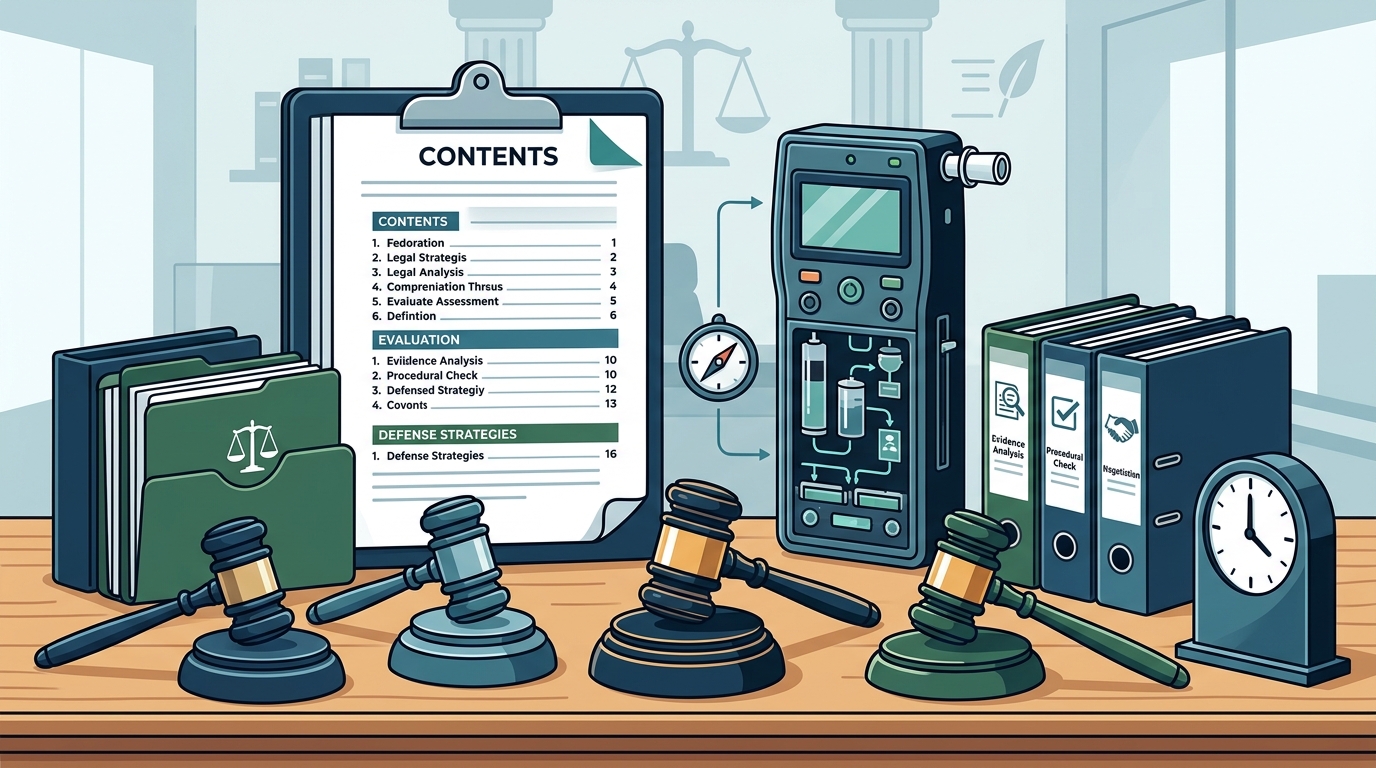
The most common piece of evidence in a New Jersey DUI case is the breath test result from the Alcotest 7110 machine. Challenging this evidence requires a detailed understanding of the device's operation, maintenance, and the legal standards governing its use. Alcotest 7110 is the state-approved breath testing device used in New Jersey, and its results are admissible only if specific procedural requirements are met.
Procedural Compliance and Calibration
New Jersey law requires that the Alcotest 7110 be calibrated and maintained according to strict state standards. If the device was not calibrated within the required timeframe, or if the calibration records are missing or inconsistent, the results may be excluded from evidence. Attorneys request the device's maintenance logs, calibration certificates, and solution change records. Any deviation from protocol can undermine the reliability of the BAC reading.
Observation Period and Operator Certification
Before a breath test is administered, the officer must observe the subject for a continuous 20-minute period. This observation is designed to ensure that the subject has not introduced foreign substances into their mouth, such as burping up stomach contents. If the officer fails to maintain continuous observation, or if the officer is not properly certified to operate the device, the test results are vulnerable to suppression. The Law Office of Edward Appel regularly reviews these procedural details to identify gaps in the state's case.
Medical Conditions and Interference
Certain medical conditions, such as gastroesophageal reflux disease (GERD) or diabetes, can produce false-positive breath test results. Additionally, the presence of certain chemicals or medications can interfere with the Alcotest's sensors. A defense attorney will investigate the client's medical history to determine if any conditions could have affected the test. This line of defense requires collaboration with medical experts and forensic toxicologists to present credible alternative explanations for the BAC reading.
Criteria for Evaluating DUI Attorneys
Not all criminal defense attorneys specialize in DUI cases. When selecting a lawyer to help reduce or dismiss a charge, you must evaluate their specific experience and resources. The following criteria are essential for making an informed decision.
| Criteria | Why It Matters | What to Ask |
|---|---|---|
| DUI Specialization | DUI defense requires specific knowledge of breath science and municipal court procedures. | What percentage of your practice is dedicated to DUI/DWI cases? |
| Local Court Experience | Familiarity with local judges and prosecutors can influence case outcomes. | How often do you appear in the specific municipal court where my case is filed? |
| Resource Access | Challenging Alcotest evidence often requires expert witnesses and investigators. | Do you have access to forensic toxicologists or DUI investigators? |
| Communication Style | Clear communication ensures you understand your options and deadlines. | How will you keep me updated on the progress of my case? |
The Law Office of Edward Appel meets these criteria through its focused practice and commitment to thorough preparation. Founder Edward G. Appel brings a trial-ready mindset to every matter, regularly challenging motor-vehicle stops, checkpoint protocols, and the reliability of Alcotest results. The firm's direct communication style ensures that clients are informed at every stage, from the initial consultation to the final resolution.
Key Takeaways
- New Jersey DUI cases are heard in municipal court, where a judge decides the outcome without a jury.
- The Alcotest 7110 is the primary evidence in most cases, and its results can be challenged based on procedural errors.
- Challenging the initial traffic stop is a powerful defense strategy that can lead to case dismissal.
- Medical conditions and device calibration issues are common grounds for suppressing breath test evidence.
- Choosing an attorney with specific DUI specialization and local court experience is critical for a favorable outcome.
- Ignition interlock requirements are a major consequence of a DUI conviction and should be a focus of any defense strategy.
- Early consultation with a lawyer allows for the preservation of evidence and the development of a tailored defense plan.
Frequently Asked Questions
Can a DUI charge be completely dismissed in New Jersey?
Yes, a DUI charge can be dismissed if the defense successfully challenges the legality of the traffic stop or the admissibility of the breath test evidence. If the evidence is suppressed, the state may not have enough to prove the case, leading to a dismissal.
What is the difference between a DUI and a DWI in New Jersey?
In New Jersey, the terms DUI and DWI are often used interchangeably to refer to the same offense under N.J.S.A. 39:4-50. The statute covers driving under the influence of alcohol or drugs. There is no separate legal distinction between the two acronyms in the state's municipal court system.
How long does a DUI case take in New Jersey?
The timeline varies, but most municipal court cases are resolved within a few months. However, if motions to suppress evidence are filed, the process can take longer. Acting quickly with an attorney helps manage deadlines and expedite the resolution.
Do I need a lawyer if I was not arrested?
Yes, even if you were not taken into custody, you may still face a DUI charge based on a breath test or officer observations. A lawyer can help you navigate the court process, challenge the evidence, and protect your license.
What is an ignition interlock device?
An ignition interlock device is a breathalyzer installed in your vehicle that prevents the car from starting if your breath alcohol concentration is above a set limit. New Jersey law requires IID installation for most DUI convictions, and non-compliance can result in further license suspension.
How does the Law Office of Edward Appel handle DUI cases?
The firm focuses on thorough preparation, challenging the reliability of breath tests, and negotiating practical resolutions. Edward G. Appel brings a trial-ready approach to every case, aiming to minimize risk and protect the client's driving privileges and future.