
How a Criminal Defense Attorney Helps with Municipal Court Charges
Municipal court charges often carry hidden consequences that far exceed the initial fine or traffic ticket. According to recent legal data, over 80% of individuals facing municipal court charges in New Jersey proceed without legal representation, a decision that frequently results in unnecessary license suspensions and permanent criminal records. When you are charged with a municipal offense, the stakes involve your driving privileges, your employment status, and your freedom. Understanding how a criminal defense attorney intervenes in these proceedings is critical for protecting your future.
Understanding Municipal Court Charges
Municipal court in New Jersey handles a wide array of offenses, ranging from traffic violations to serious criminal charges like disorderly persons offenses. Unlike state or federal courts, municipal court operates under specific procedural rules that can be complex for laypeople to navigate. The primary goal of the prosecution is often to secure a conviction, while the defense attorney’s role is to challenge the validity of the charge and protect your rights.
One of the most critical aspects of municipal court is the potential for plea bargains. Without legal counsel, defendants often accept unfavorable pleas that result in points on their driving record or a criminal conviction. A seasoned attorney understands the local prosecutors and judges, allowing them to negotiate terms that minimize these negative outcomes. For more information on specific charges, you can explore our Criminal Defense services.
Key Defense Strategies
A criminal defense attorney employs several strategic approaches to challenge municipal court charges. The first step is always a thorough review of the facts. This includes examining the police report, witness statements, and any available video evidence. If there are discrepancies in the officer’s account, the attorney can file motions to suppress evidence or dismiss the charge.
Another common strategy is challenging the legality of the stop or arrest. If the officer did not have probable cause or reasonable suspicion, any evidence obtained during the stop may be inadmissible in court. This is particularly relevant in DUI/DWI cases, where the DUI Defense requires meticulous scrutiny of breathalyzer results and field sobriety tests.
Challenging Probable Cause
Probable cause is the legal standard that allows law enforcement to make an arrest or conduct a search. If the attorney can demonstrate that probable cause was lacking, the case may be dismissed outright. This requires a deep understanding of constitutional law and recent court precedents.
Questioning Evidence Reliability
Evidence in municipal court is not always infallible. Breathalyzer machines require regular calibration and maintenance. If the device was not properly calibrated, the results may be unreliable. Similarly, field sobriety tests are subjective and can be influenced by environmental factors or the defendant’s physical condition.
The Role of Evidence Review
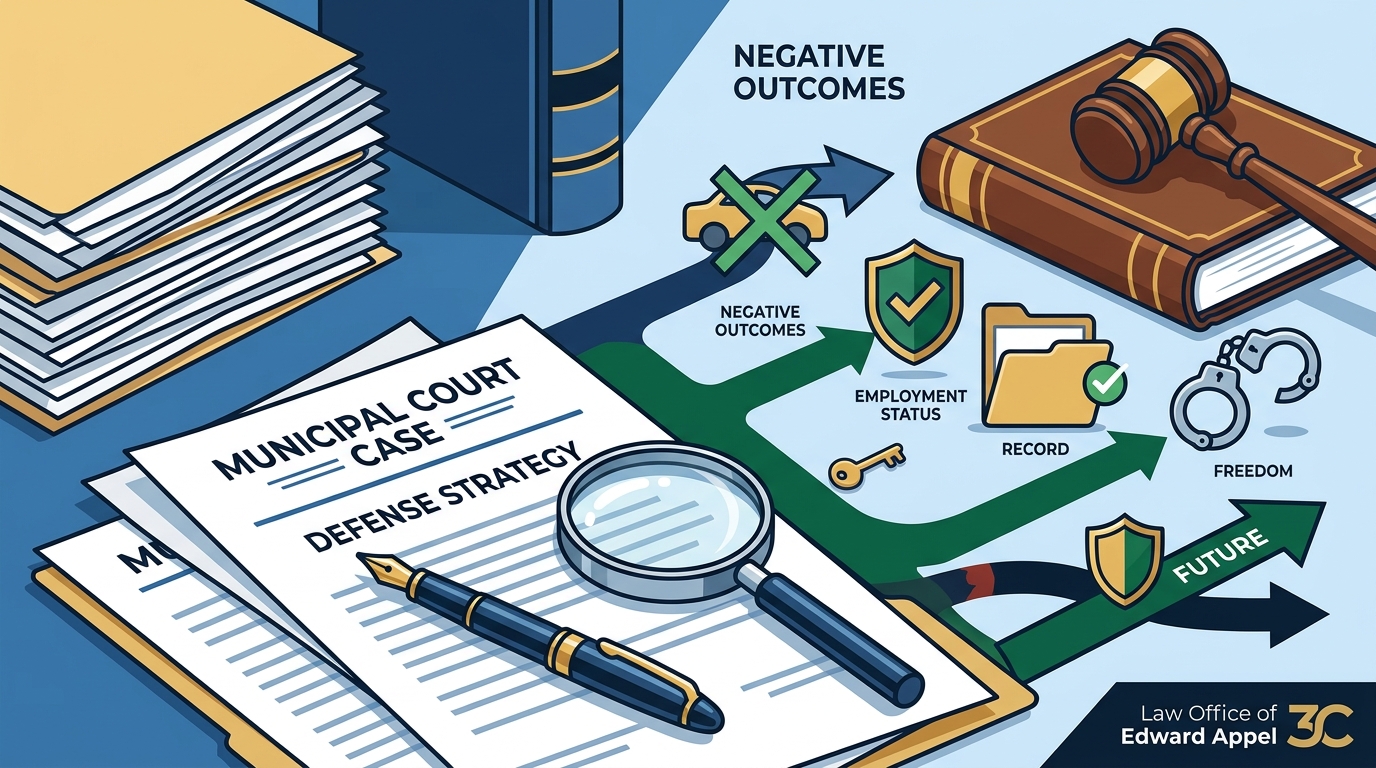
Evidence review is a cornerstone of effective defense. Attorneys must analyze every piece of evidence to identify weaknesses in the prosecution’s case. This includes reviewing dashcam footage, body camera video, and 911 calls. Any inconsistency in the timeline or description of events can be used to cast doubt on the prosecution’s narrative.
In addition to physical evidence, attorneys also review the credibility of witnesses. If a witness has a history of unreliable testimony or a bias against the defendant, their credibility can be challenged during cross-examination. This process is critical in building a strong defense strategy.
Negotiation and Plea Bargaining
Not all cases go to trial. In many instances, a skilled attorney can negotiate a plea bargain that results in a reduced charge or penalty. This might involve pleading to a lesser offense that does not carry points on your driving record or a criminal conviction. The goal is to achieve the best possible outcome while avoiding the risks of a trial.
Negotiation requires a strong relationship with local prosecutors and a thorough understanding of the law. Attorneys who specialize in municipal court, such as those at the Law Office of Edward Appel, have the experience and reputation to negotiate effectively on behalf of their clients.
Reducing Points on Your License
For traffic offenses, reducing points on your driving record is often a primary goal. Points can lead to increased insurance premiums and license suspension. An attorney can often negotiate a plea to a non-moving violation that carries no points.
Avoiding a Criminal Conviction
In cases involving disorderly persons offenses, avoiding a criminal conviction is crucial. A conviction can impact your employment, professional licensing, and immigration status. Attorneys may seek diversion programs or conditional discharge options to help clients avoid a permanent record.
Trial Preparation and Representation
If a case goes to trial, preparation is key. Attorneys must prepare their clients for testimony, anticipate the prosecution’s arguments, and present a compelling defense. This includes selecting the right jury, if applicable, and crafting opening and closing statements that resonate with the judge or jury.
During the trial, the attorney will cross-examine prosecution witnesses, present defense witnesses, and argue legal motions. Their ability to remain calm and professional under pressure is essential for a successful outcome. For those facing serious charges, understanding the Attorney Profile of your legal representation can provide confidence in their capabilities.
Jury Selection
In cases where a jury trial is available, selecting the right jury is critical. Attorneys use voir dire to identify potential biases and ensure a fair trial. This process requires a deep understanding of human psychology and legal strategy.
Closing Arguments
The closing argument is the attorney’s final opportunity to persuade the judge or jury. It must summarize the evidence, highlight weaknesses in the prosecution’s case, and present a clear narrative of innocence or reasonable doubt.
Avoiding Collateral Consequences
Municipal court charges can have long-lasting collateral consequences that extend beyond the immediate penalty. These include increased insurance rates, difficulty finding employment, and restrictions on professional licensing. An attorney helps clients understand these risks and take steps to mitigate them.
For example, a DUI conviction can lead to the loss of a commercial driver’s license, impacting a person’s ability to earn a living. An attorney can often negotiate a plea that avoids this outcome. Additionally, attorneys can assist with expungement petitions to clear criminal records after the case is resolved.
Impact on Insurance Rates
A single traffic violation can increase insurance premiums by thousands of dollars over several years. By negotiating a plea to a non-moving violation, attorneys can help clients avoid these financial burdens.
Employment Risks
Many employers conduct background checks that reveal municipal court convictions. A criminal defense attorney can help clients navigate these challenges by seeking outcomes that do not result in a public record.
Key Takeaways
- Municipal court charges carry serious consequences, including license suspension and criminal records, which require professional legal intervention.
- Evidence review is critical for identifying weaknesses in the prosecution’s case, such as improper calibration of breathalyzer devices or lack of probable cause.
- Negotiation skills are essential for securing plea bargains that reduce points on your license or avoid criminal convictions entirely.
- Trial preparation involves rigorous strategy, including jury selection, witness cross-examination, and compelling closing arguments.
- Collateral consequences like increased insurance rates and employment barriers can be mitigated through strategic legal outcomes.
- Local expertise matters, as attorneys familiar with New Jersey municipal courts can navigate procedural nuances more effectively.
- Early consultation is vital to preserve evidence and protect your rights from the moment of arrest or citation.
Frequently Asked Questions
What is the difference between municipal court and superior court?
Municipal court handles less serious offenses, such as traffic violations and disorderly persons offenses, while superior court handles felonies and more complex criminal cases. Municipal court procedures are often faster but can still result in significant penalties.
Can I represent myself in municipal court?
While you have the right to represent yourself, it is generally not advisable. Municipal court rules are complex, and prosecutors are experienced in securing convictions. An attorney can navigate these complexities more effectively.
What happens if I fail to appear in municipal court?
Failing to appear can result in a bench warrant for your arrest, additional fines, and license suspension. It is crucial to address any missed court dates immediately with legal counsel.
How long does a municipal court case take?
The timeline varies depending on the complexity of the case and court scheduling. Some cases can be resolved in a few weeks, while others may take several months. An attorney can help expedite the process where possible.
Can a criminal defense attorney help with expungement?
Yes, attorneys can assist with expungement petitions to clear criminal records after a case is resolved. This can help restore driving privileges and improve employment prospects.
What is a conditional discharge?
A conditional discharge is a program where a defendant completes certain requirements, such as community service or counseling, in exchange for the dismissal of charges. It avoids a criminal conviction.
How do I choose the right attorney for municipal court?
Look for an attorney with experience in municipal court, a strong track record of success, and familiarity with local judges and prosecutors. Reading client testimonials and reviewing their practice areas can help you make an informed decision.
Contact Us for Legal Help
If you are facing municipal court charges, do not wait until it is too late. Contact the Law Office of Edward Appel today for a free consultation. Our experienced team is ready to fight for your rights and protect your future. Call us at 856-856-2373 or visit our Contact Page to schedule your appointment.