

Municipal court cases often carry hidden long-term consequences that far exceed the immediate fine or short jail sentence. According to the National Association of Criminal Defense Lawyers, the vast majority of criminal cases in the United States are resolved in state and local courts, where municipal jurisdictions play a critical role in processing traffic, disorderly conduct, and minor criminal offenses. Understanding how a criminal defense attorney helps with municipal court charges is essential for protecting your driving privileges, employment prospects, and civil liberties. (Contact Us)
Understanding Municipal Court Jurisdiction
Municipal courts are specialized judicial bodies that handle a specific subset of legal matters within a defined geographic boundary. Unlike superior courts that handle felonies and complex civil litigation, municipal courts focus on local ordinances, traffic infractions, and minor criminal offenses. This specialization means that judges in these courts often manage high volumes of cases, which can lead to rushed proceedings if defendants are not prepared. (Frequently Asked Questions)
A criminal defense attorney helps with municipal court charges by navigating these procedural nuances. They understand the local rules of evidence, the preferences of specific judges, and the prosecution's typical approach in that jurisdiction. This local knowledge is invaluable for crafting a defense strategy that resonates with the court's operational culture.
For individuals facing charges, the stakes are rarely just about the immediate penalty. A conviction can impact insurance rates, professional licensing, and even future employment opportunities. By engaging with NJ Criminal Help, defendants gain access to legal expertise that prioritizes long-term reputation management alongside immediate case resolution.
Procedural Strategies for Defense
The first step in any municipal court defense is a thorough review of the charging documents and the underlying facts. A criminal defense attorney helps with municipal court charges by identifying procedural errors that could lead to dismissal. These errors might include improper service of process, lack of jurisdiction, or violations of the defendant's constitutional rights during the arrest.
Reviewing Police Reports and Evidence
Attorneys meticulously examine police reports, dashcam footage, and witness statements for inconsistencies. Even minor discrepancies can undermine the prosecution's case. For instance, if an officer's report contradicts physical evidence or witness testimony, the defense can argue reasonable doubt.
Challenging the Legality of the Stop
In traffic-related municipal cases, the legality of the initial stop is often the central issue. If the officer lacked probable cause or reasonable suspicion to initiate the traffic stop, any evidence obtained thereafter may be suppressed. This legal principle, rooted in the Fourth Amendment, is a powerful tool for defense attorneys.
Impact on Traffic Violations
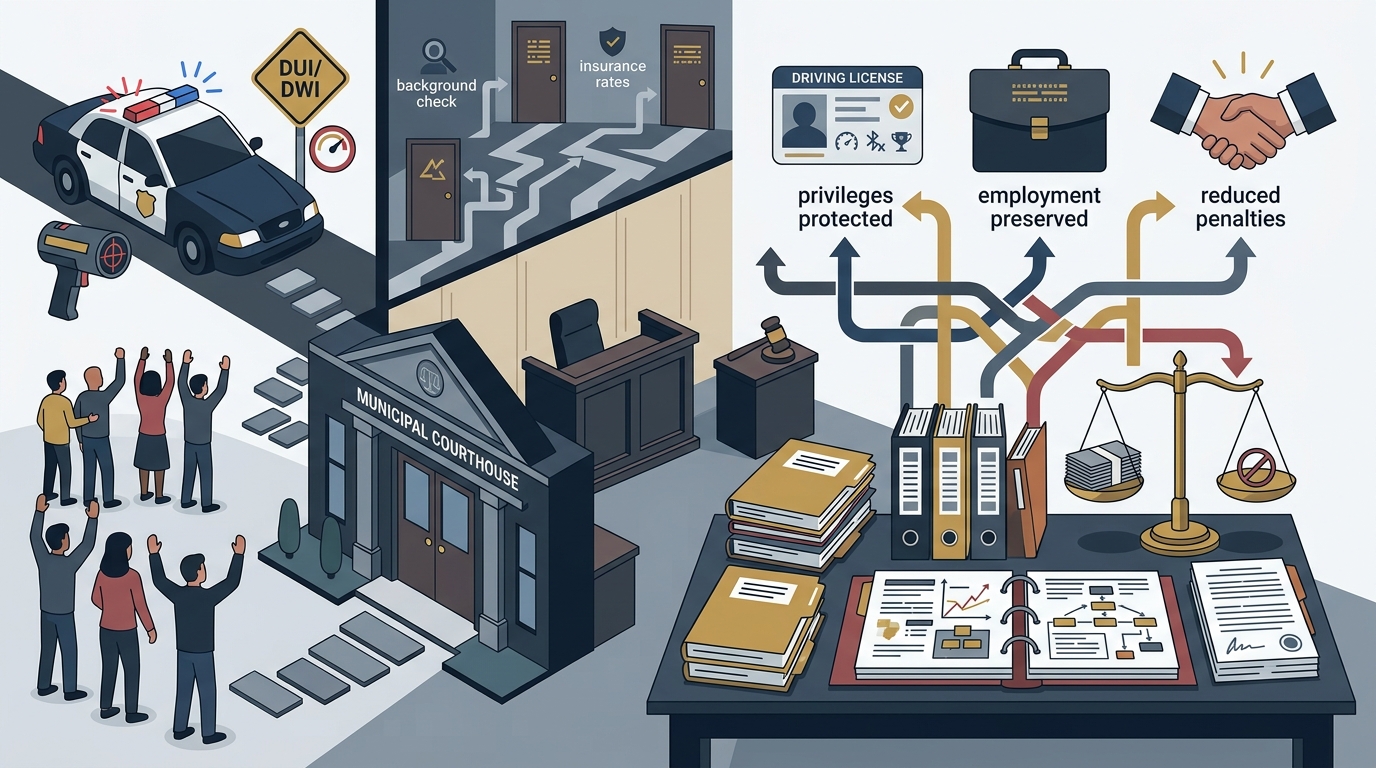
Traffic violations are the most common type of case in municipal court. While a speeding ticket might seem minor, the cumulative effect of points on a driving record can lead to license suspension and skyrocketing insurance premiums. A criminal defense attorney helps with municipal court charges by negotiating reductions or dismissals that protect your driving privileges.
For example, an attorney might negotiate a plea to a non-moving violation, which typically does not add points to your license. This strategy allows you to resolve the case without the long-term financial and legal repercussions of a conviction. Additionally, attorneys can argue for traffic school or defensive driving courses, which may further mitigate penalties.
According to the Insurance Research Council, drivers with a single moving violation see an average increase in insurance premiums of 20 to 30 percent. This financial impact underscores the importance of seeking professional legal counsel early in the process.
Defending Disorderly Conduct Charges
Disorderly conduct charges are broad and can encompass a wide range of behaviors, from public intoxication to altercations. These charges are often subjective, relying heavily on the officer's interpretation of events. A criminal defense attorney helps with municipal court charges by challenging the subjective nature of the allegations and presenting alternative narratives supported by evidence.
One common defense strategy is to argue that the behavior did not meet the legal threshold for disorderly conduct. For example, if the alleged conduct was protected speech or did not cause a public disturbance, the charge may be invalid. Attorneys also look for mitigating factors, such as provocation or lack of intent, which can reduce the severity of the outcome.
Furthermore, a criminal record for disorderly conduct can have significant collateral consequences. It may affect professional licenses, security clearances, and housing applications. By securing a dismissal or a favorable plea, an attorney helps protect your future opportunities.
Plea Negotiations and Diversion
Not every case goes to trial. In many municipal court instances, plea negotiations are the most efficient path to resolution. A criminal defense attorney helps with municipal court charges by leveraging their relationships with prosecutors to secure favorable plea deals. These negotiations might result in reduced charges, lower fines, or alternative sentencing options.
Pre-Trial Intervention Programs
For first-time offenders, pre-trial intervention (PTI) programs offer a chance to avoid a conviction entirely. By completing community service, counseling, or educational requirements, defendants can have their charges dismissed. Attorneys play a crucial role in guiding clients through these programs and ensuring compliance.
Conditional Discharge
Conditional discharge is another option for minor offenses, particularly drug-related charges. This allows defendants to avoid a criminal record if they successfully complete a probationary period. An attorney helps with municipal court charges by advocating for this outcome when appropriate, ensuring that the client understands the obligations and benefits.
Trial Preparation and Representation
When a case proceeds to trial, the role of the defense attorney becomes even more critical. Municipal court trials are often bench trials, meaning the judge decides the verdict without a jury. This requires a different approach than jury trials, focusing on legal arguments and evidentiary rulings rather than emotional appeals.
A criminal defense attorney helps with municipal court charges by preparing compelling opening and closing statements, cross-examining prosecution witnesses, and presenting defense evidence. They ensure that the client's rights are protected throughout the trial and that the judge receives a clear, logical argument for acquittal or leniency.
Effective trial preparation also involves anticipating the prosecution's arguments and preparing rebuttals. This proactive approach can sway the judge's decision, especially in close cases where the evidence is ambiguous. By presenting a well-organized and legally sound defense, attorneys maximize the chances of a favorable outcome.
Key Takeaways
- Local Expertise Matters: Municipal court judges and prosecutors have specific preferences and procedures that experienced attorneys understand and can leverage.
- Long-Term Consequences: A municipal court conviction can impact insurance rates, employment, and professional licensing, making legal defense crucial.
- Procedural Errors: Attorneys identify and exploit procedural mistakes, such as illegal stops or improper service, to dismiss charges.
- Plea Negotiations: Skilled negotiation can lead to reduced charges, point-free resolutions, or diversion programs for first-time offenders.
- Trial Advocacy: In bench trials, clear legal arguments and effective cross-examination are essential for challenging the prosecution's case.
- Diversion Options: Programs like Pre-Trial Intervention offer a path to avoid a criminal record for eligible defendants.
- Proactive Defense: Early engagement with a criminal defense attorney helps preserve evidence and build a stronger case strategy.
Frequently Asked Questions
Do I really need a lawyer for a municipal court case?
While you can represent yourself, a criminal defense attorney helps with municipal court charges by providing expertise in local laws and procedures. They can identify defenses you might miss and negotiate better outcomes, potentially saving you from fines, points, or jail time.
What is the difference between municipal court and superior court?
Municipal courts handle minor offenses like traffic violations and disorderly conduct, while superior courts handle felonies and more complex civil cases. The procedures and potential penalties differ significantly between the two jurisdictions.
Can a criminal defense attorney get my charges dismissed?
An attorney can often get charges dismissed by identifying procedural errors, challenging the legality of the stop, or negotiating with the prosecutor. Success depends on the specific facts of the case and the strength of the defense strategy.
What are the consequences of a municipal court conviction?
Convictions can lead to fines, jail time, points on your driving record, increased insurance premiums, and a permanent criminal record. These consequences can affect employment, housing, and professional licensing.
How long does a municipal court case take?
The timeline varies depending on the court's schedule and the complexity of the case. Some cases are resolved quickly through plea negotiations, while others may take several months to go to trial. An attorney can help expedite the process where possible.
What is pre-trial intervention?
Pre-trial intervention (PTI) is a program that allows first-time offenders to avoid a conviction by completing certain requirements, such as community service or counseling. Upon successful completion, the charges are typically dismissed.
Can I change my lawyer after being charged?
Yes, you can change your lawyer at any time. However, it is generally more effective to engage an attorney early in the process to build a strong defense strategy from the outset.
Take Control of Your Legal Future
Facing charges in municipal court can be overwhelming, but you do not have to navigate the system alone. A criminal defense attorney helps with municipal court charges by providing the expertise and advocacy needed to protect your rights and future. Contact NJ Criminal Help today to schedule a consultation and discuss your case with a dedicated legal professional.