

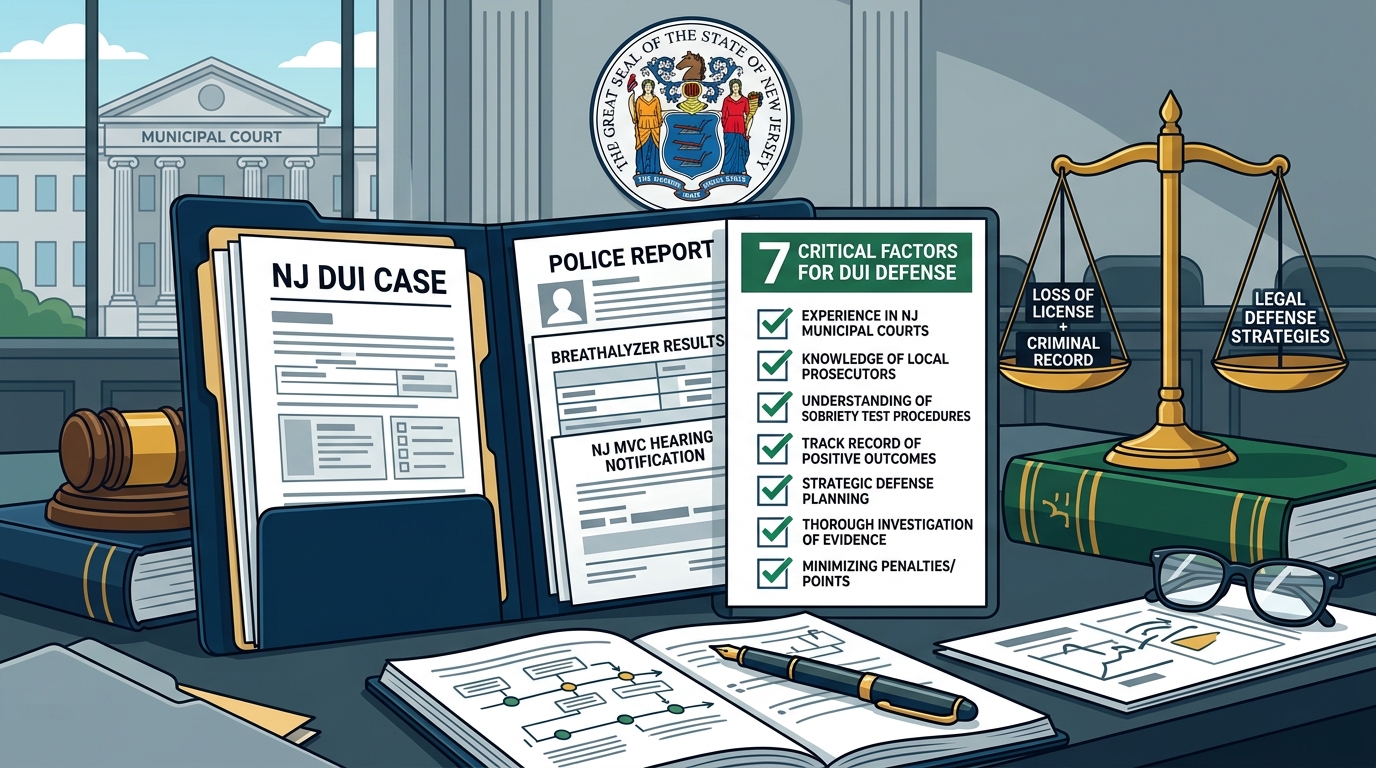
Hiring a DUI Defense Attorney: 7 Critical Factors in New Jersey
New Jersey enforces some of the strictest drunk driving laws in the United States, making the choice of legal representation a decisive factor in your case outcome. According to recent state traffic safety reports, over 10,000 individuals face DUI charges annually in New Jersey alone, with penalties ranging from heavy fines to mandatory jail time for repeat offenses. This high-stakes environment demands an attorney who understands the specific procedural nuances of the Garden State's Motor Vehicle Commission and local municipal courts. Selecting the wrong counsel can result in unnecessary license suspensions and a permanent criminal record that affects employment and insurance rates for years. (Contact Us)
Understanding NJ DUI Laws and Penalties
To hire the right attorney, you must first understand the severity of the charges you are facing. New Jersey classifies DUI offenses based on blood alcohol content (BAC) levels and prior convictions. A first-time offender with a BAC between 0.08% and 0.10% faces different penalties than someone with a BAC of 0.15% or higher, known as an "high BAC" offense. The legal framework is rigid, and procedural errors by law enforcement can sometimes be leveraged to dismiss charges or reduce penalties.
DUI is defined as operating a vehicle while under the influence of alcohol or controlled substances to a degree that impairs normal driving abilities. This legal definition is broad and allows prosecutors significant leeway in building cases. However, it also provides defense attorneys with opportunities to challenge the validity of field sobriety tests and breathalyzer results. An attorney who specializes in this area will know exactly which procedural steps were likely missed by the arresting officer, such as improper calibration of the Intoxilyzer machine or failure to observe the defendant for the required 20-minute waiting period.
The consequences of a conviction extend far beyond the courtroom. A first-time DUI conviction in New Jersey typically results in a license suspension of three to eight months, fines ranging from $300 to $500, and mandatory installation of an ignition interlock device. For high BAC cases, these penalties are significantly harsher, including longer jail sentences and higher fines. Understanding these baseline penalties helps you evaluate whether an attorney's proposed strategy is realistic and effective.
Evaluating Attorney Experience and Specialization
Not all criminal defense attorneys are equipped to handle DUI cases effectively. DUI defense requires a specialized skill set that combines knowledge of traffic law, forensic science, and local court politics. When interviewing potential attorneys, ask specifically about their volume of DUI cases. An attorney who handles fifty DUI cases a year will be far more effective than a general practitioner who handles one every few months.
Look for attorneys who are members of professional organizations dedicated to DUI defense, such as the National College for DUI Defense or the New Jersey Association of Criminal Defense Lawyers. These memberships indicate a commitment to staying current with evolving legal standards and scientific testing methods. Additionally, check if the attorney has experience with the specific municipal court where your case will be heard. Local judges and prosecutors have unique preferences and procedures that can significantly impact case outcomes.
Experience also extends to negotiation skills. Many DUI cases are resolved through plea negotiations before trial. An experienced attorney knows which prosecutors are willing to negotiate for reduced charges, such as a non-moving violation like "wet driving," which carries fewer penalties. This knowledge is often gained through years of repeated interactions within the local legal community.
Analyzing Case Strategies and Defense Tactics
A competent DUI attorney will not simply accept the police report as fact. They will conduct a thorough investigation into the circumstances of your arrest. This includes reviewing dashcam footage, body camera recordings, and the officer's notes for inconsistencies. The goal is to identify any violations of your constitutional rights that could lead to the suppression of evidence.
One common defense strategy involves challenging the accuracy of the breathalyzer test. Breathalyzer machines require regular maintenance and calibration. If the device was not properly serviced or if the officer did not follow proper protocol, the results may be deemed unreliable. Another strategy involves questioning the legality of the traffic stop itself. If the officer did not have probable cause to pull you over, any evidence gathered during the stop may be excluded from the trial.
For cases involving field sobriety tests, an attorney will examine whether the tests were administered correctly. Field sobriety tests are subjective and can be influenced by factors such as medical conditions, fatigue, or nervousness. An experienced attorney will know how to cross-examine the officer to highlight these potential sources of error. This level of strategic analysis is critical for building a strong defense.
Assessing Communication and Accessibility
Legal proceedings can be stressful and confusing. A good attorney will keep you informed at every stage of the process. During your initial consultation, pay attention to how clearly the attorney explains your options and potential outcomes. Do they answer your questions patiently? Do they use jargon that you cannot understand, or do they explain complex legal concepts in plain language?
Accessibility is also crucial. You need an attorney who is available to return your calls or emails in a timely manner. Legal cases can move quickly, and delays in communication can sometimes impact your case. Ask about their preferred method of communication and their typical response time. Some attorneys may require you to contact their office through a paralegal or assistant, which can slow down the process. Ensure you are comfortable with their communication style before hiring them.
Transparency about case progress is another key indicator of good service. Your attorney should provide regular updates on the status of your case, including any upcoming court dates or negotiations. They should also be honest about the likelihood of success, avoiding unrealistic promises that could lead to disappointment later.
Understanding Fees and Cost Structures
DUI defense can be expensive, but the cost should be weighed against the potential consequences of a conviction. Attorneys typically charge either a flat fee or an hourly rate. Flat fees are common for straightforward DUI cases and cover all aspects of the defense, from the initial consultation to the final resolution. Hourly rates are more common for complex cases that may require extensive litigation or multiple court appearances.
When discussing fees, ask for a detailed breakdown of what is included in the cost. Does the fee cover court appearances, filing fees, and expert witness costs? Are there any additional expenses you should anticipate? Transparency in billing is essential to avoid unexpected costs later. While cost is an important factor, it should not be the sole determinant in your decision. The cheapest attorney may not provide the quality of representation you need.
Some attorneys may offer payment plans or sliding scale fees based on your income. If cost is a concern, be upfront about your budget during the consultation. A reputable attorney will work with you to find a solution that fits your financial situation while still providing effective representation.
Reviewing Client Testimonials and Reputation
Online reviews and testimonials can provide valuable insights into an attorney's reputation and client satisfaction. Look for reviews on independent platforms such as Google, Avvo, or Martindale-Hubbell. Pay attention to reviews that mention specific outcomes or aspects of the service, such as communication, professionalism, and results.
However, be cautious of reviews that seem overly generic or suspiciously positive. A mix of positive and negative reviews is often more realistic than a perfect score. Look for patterns in the feedback. Do multiple clients mention the same strengths or weaknesses? This can help you gauge the attorney's consistent performance.
Additionally, check the attorney's standing with the New Jersey Board on Attorney Disciplinary Enforcement. This will reveal any history of professional misconduct or disciplinary actions. A clean record is a basic requirement for any attorney you consider hiring. You can also ask for references from past clients, although some attorneys may be hesitant to provide them due to privacy concerns.
Making the Final Decision
After evaluating potential attorneys based on experience, strategy, communication, fees, and reputation, it is time to make your decision. Trust your instincts. You need to feel confident in your attorney's ability to represent you effectively. If you have doubts about any aspect of their service, it is better to continue your search.
Once you have selected an attorney, ensure you have a clear written agreement outlining the scope of representation and the fee structure. This agreement protects both you and your attorney and helps prevent misunderstandings later. Be prepared to provide all relevant information about your case to your attorney to ensure they have the best possible chance of success.
| Factor | What to Look For | Why It Matters |
|---|---|---|
| Specialization | Dedicated DUI defense practice | Ensures deep knowledge of NJ specific laws and court procedures. |
| Experience | High volume of local cases | Indicates familiarity with local judges and prosecutors. |
| Strategy | Challenging evidence and procedure | Identifies potential weaknesses in the prosecution's case. |
| Communication | Clear, timely updates | Reduces stress and keeps you informed of case progress. |
| Fees | Transparent flat or hourly rates | Prevents unexpected costs and ensures budget alignment. |
Key Takeaways
- New Jersey DUI laws are among the strictest in the US, with penalties including license suspension and ignition interlock requirements.
- Specialized experience in DUI defense is critical, as general criminal attorneys may lack specific knowledge of breathalyzer science and local court nuances.
- Challenging the legality of the traffic stop and the accuracy of field sobriety tests are common and effective defense strategies.
- Communication style and accessibility are vital for reducing client stress and ensuring timely case management.
- Transparent fee structures, such as flat fees for standard cases, help avoid unexpected financial burdens during legal proceedings.
- Online reviews and disciplinary records provide objective data on an attorney's reputation and professional conduct.
- Local court familiarity can significantly impact negotiation outcomes, making attorneys with strong local ties advantageous.
Frequently Asked Questions
How much does a DUI attorney cost in New Jersey?
The cost varies depending on the complexity of the case and the attorney's experience. First-time offenders may pay between $1,500 and $3,500, while repeat offenses or high BAC cases can cost significantly more. Always request a detailed fee agreement upfront.
Can a DUI attorney get my charges dismissed?
An experienced attorney can often get charges reduced or dismissed by identifying procedural errors, such as improper calibration of breathalyzer devices or illegal traffic stops. However, dismissal is not guaranteed and depends on the specific facts of your case.
What is the difference between a DUI and a DWI in New Jersey?
In New Jersey, the terms DUI (Driving Under the Influence) and DWI (Driving While Intoxicated) are used interchangeably. The state uses the term "DUI" in its statutes, but the legal standards and penalties are the same.
Do I need a lawyer for a first-time DUI offense?
Yes, even for a first-time offense, the penalties can be severe, including license suspension and fines. A lawyer can help mitigate these penalties, potentially avoiding jail time or reducing the length of license suspension.
How long does a DUI case take to resolve in New Jersey?
Most first-time DUI cases are resolved within three to six months, depending on the court's schedule and the complexity of the case. Repeat offenses or cases requiring trial may take longer.
What happens if I refuse a breathalyzer test?
Refusing a breathalyzer test in New Jersey results in automatic license suspension, regardless of the DUI charge outcome. This is an administrative penalty handled by the Motor Vehicle Commission. An attorney can help navigate this separate administrative hearing.
Take Action to Protect Your Future
Do not face the complexities of a New Jersey DUI charge alone. The stakes are too high, and the legal landscape is too intricate for self-representation. Contact NJ Criminal Help today to schedule a confidential consultation. Our experienced team is ready to analyze your case, develop a robust defense strategy, and fight for the best possible outcome. Visit our services page to learn more about how we can assist you.