

Being charged with a crime for the first time is a disorienting experience that often triggers immediate anxiety about the future. The legal system in New Jersey operates on strict statutes that can seem opaque to those unfamiliar with criminal procedure. Understanding the typical outcomes for first-time offenders is critical because it directly influences how you should prepare for your defense. The stakes are high, ranging from minor fines to significant incarceration, depending on the severity of the charge and your prior record. (Contact Us)
Understanding Your Charges and Classification
The outcome of your case begins with how New Jersey classifies the specific offense you are facing. The state divides crimes into distinct categories, each carrying different statutory penalties and procedural requirements. Disorderly Persons offenses are the least severe, often treated as misdemeanors in other states. These include minor theft, simple assault, or disorderly conduct. Penalties typically involve fines up to $1,000 and up to six months in county jail. (Customer Experience)
More serious charges fall under indictable crimes, which are categorized by degree. A fourth-degree crime, such as certain drug possession charges, can result in up to 18 months in prison. Third-degree crimes, like aggravated assault, carry a sentence of five to 10 years. Second-degree crimes, including robbery or aggravated sexual assault, are far more severe, with potential sentences of five to 10 years or more. First-degree crimes, such as murder or treason, carry the harshest penalties, including life imprisonment.
Knowing your charge classification is the first step in determining your potential outcome. It dictates whether you will face a judge in municipal court or a grand jury in superior court. For accurate legal definitions and charge classifications, refer to the New Jersey criminal code.
The Pretrial Process and Bail
After your arrest, you will undergo an initial court appearance where bail is determined. New Jersey uses a risk-based assessment system rather than cash bail for most offenses. The court evaluates your likelihood of appearing for future hearings and your danger to the community. First-time defendants often receive favorable conditions, such as release on their own recognizance or with minimal financial conditions.
However, if the prosecution argues that you pose a flight risk or a danger, the court may impose stricter conditions. This can include electronic monitoring, regular check-ins with a probation officer, or surrendering your passport. The outcome of this stage sets the tone for the rest of your case. A defendant who complies strictly with bail conditions is often viewed more favorably by prosecutors and judges later in the process.
According to data from the New Jersey Courts, the majority of pretrial defendants are released with conditions that allow them to maintain employment and family ties while awaiting trial.
Diversion Programs for First-Timers
One of the most favorable outcomes for a first-time defendant is eligibility for a diversion program. These programs allow you to avoid a criminal conviction entirely by completing specific requirements. If you successfully complete the program, the charges are typically dismissed, and your record remains clean. This is a critical advantage for individuals who want to protect their career prospects and housing opportunities.
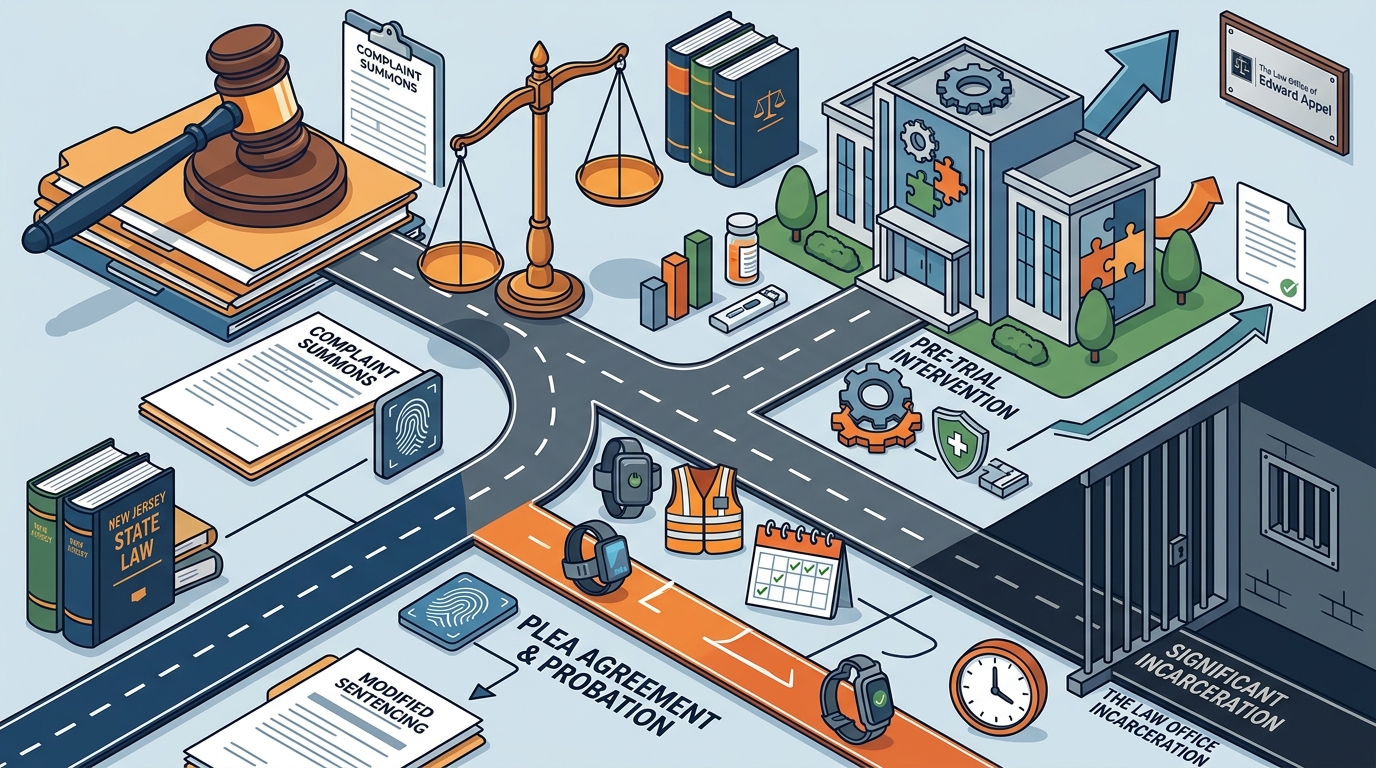
The most common program is the Pretrial Intervention (PTI). PTI is available for many indictable crimes and some disorderly persons offenses. It usually lasts between one and three years. During this period, you must comply with conditions such as community service, counseling, and regular reporting to a supervisor. Failure to comply can result in removal from the program and a return to traditional prosecution.
Another option is the Municipal Court Treatment Court for disorderly persons offenses. This program often focuses on substance abuse or mental health treatment. Successful completion leads to the dismissal of charges. For more information on eligibility and application processes, visit the NJ Criminal Help resources page.
Trial Outcomes and Sentencing
If your case does not result in a dismissal or diversion, it may proceed to trial or a plea negotiation. The vast majority of criminal cases in New Jersey are resolved through plea agreements rather than going to trial. Prosecutors often offer reduced charges or recommended sentences in exchange for a guilty plea. This allows the defendant to avoid the uncertainty of a trial and the potential for a harsher sentence if convicted.
If you go to trial and are found guilty, the judge has discretion in sentencing within the statutory guidelines. For first-time offenders, judges often consider mitigating factors such as remorse, cooperation with law enforcement, and strong community ties. Probation is a common outcome for non-violent crimes. You may be required to serve time in a county jail, but suspended sentences are also possible.
Recent studies on criminal justice outcomes indicate that first-time offenders who engage in restorative justice practices are less likely to reoffend than those who do not. This highlights the importance of demonstrating rehabilitation efforts to the court.
Long-Term Impact on Your Record
A criminal conviction can have lasting effects on your life, even if the sentence is light. It can impact your ability to secure employment, obtain professional licenses, and qualify for housing. In New Jersey, expungement laws have become more favorable in recent years, allowing certain convictions to be sealed from public view after a waiting period.
For disorderly persons offenses, you may be eligible for expungement after five years. Indictable crimes generally require a seven-year waiting period. However, eligibility depends on the nature of the crime and your subsequent conduct. If you have no further legal issues during the waiting period, your chances of success improve significantly.
Understanding the long-term implications is essential for making informed decisions during your defense. A skilled attorney can help you navigate the expungement process and minimize the impact of a conviction on your future. For guidance on record clearance, consult the New Jersey Consumer Affairs guidelines on legal rights.
Key Takeaways
- Charge Classification Matters: Outcomes vary significantly between Disorderly Persons offenses and Indictable Crimes.
- Diversion is Possible: First-time offenders may qualify for PTI or treatment courts to avoid conviction.
- Bail Conditions Set the Tone: Compliance with pretrial release conditions positively influences case outcomes.
- Plea Deals are Common: Most cases are resolved through negotiation rather than trial.
- Expungement Offers Relief: Certain convictions can be sealed after a five to seven year waiting period.
- Legal Representation is Critical: An experienced attorney can identify diversion opportunities and negotiate better terms.
- Record Impact is Severe: A conviction can affect employment, housing, and professional licensing for years.
Frequently Asked Questions
What is the most common outcome for a first-time offender in NJ?
The most common outcome is a plea agreement that results in probation, community service, or a diversion program, rather than jail time.
Can a first-time offender avoid a criminal record?
Yes, if you are eligible for and successfully complete a diversion program like Pretrial Intervention (PTI), the charges are dismissed, and no conviction is entered.
How long does the PTI program last?
PTI programs typically last between one and three years, depending on the severity of the charge and the specific conditions set by the court.
What happens if I fail my bail conditions?
Failing bail conditions can result in your arrest and detention until trial. It also negatively impacts your credibility with the judge and prosecutor during sentencing.
When can I expunge a disorderly persons offense?
You can typically apply for expungement of a disorderly persons offense five years after the completion of your sentence, provided you have no further convictions.
Do I need a lawyer for a first-time charge?
Yes, having legal representation is crucial to navigate the complexities of diversion programs, plea negotiations, and potential sentencing outcomes.
What is the difference between a municipal court and superior court?
Municipal court handles Disorderly Persons offenses, while superior court handles Indictable Crimes. The procedures, penalties, and rights differ significantly between the two.
Secure Your Future Today
The outcome of your first criminal case depends on many factors, but your actions in the early stages can significantly influence the result. Do not navigate this complex legal landscape alone. Contact NJ Criminal Help today to schedule a consultation and learn about your options for a favorable resolution.