

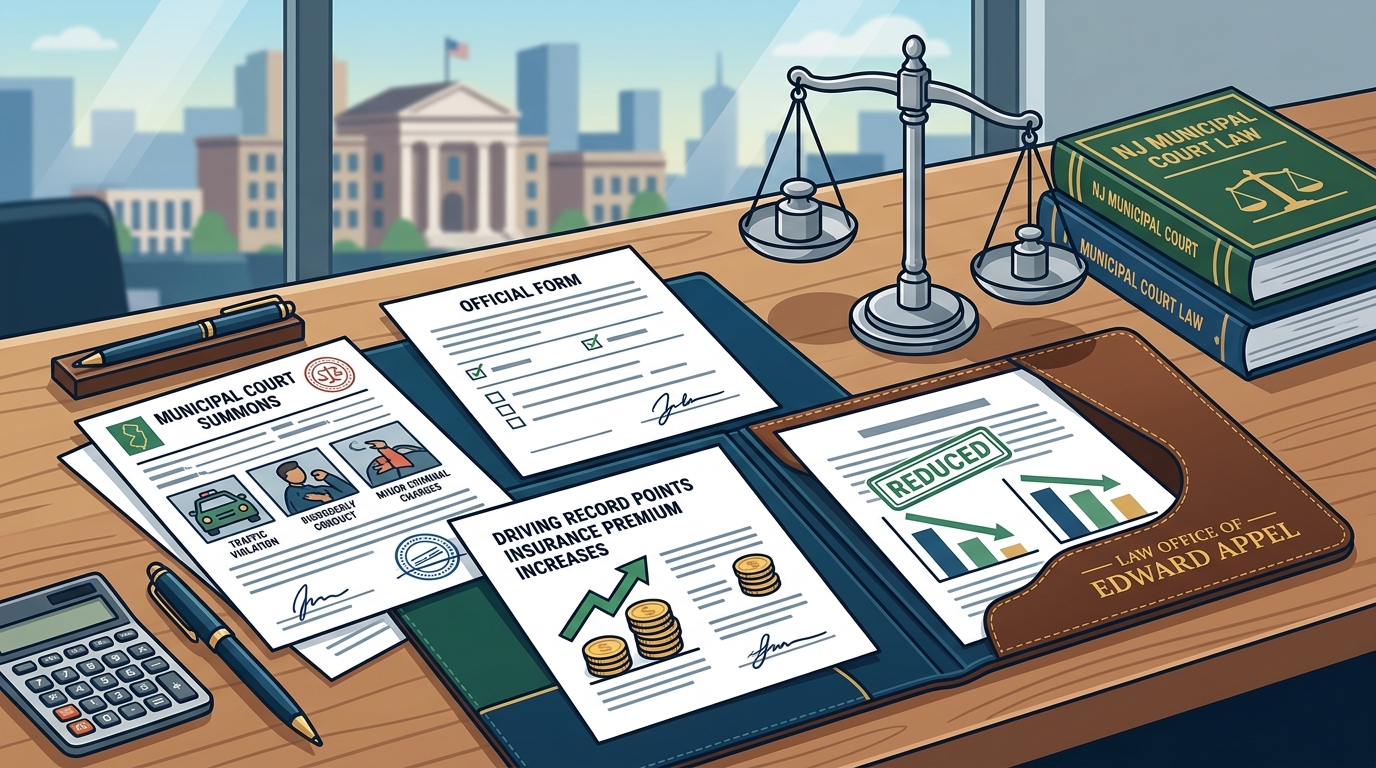
Municipal court offenses in New Jersey often carry severe consequences that extend far beyond the initial fine. According to recent legal data, over 1.5 million cases are processed annually in New Jersey municipal courts, with a significant portion involving traffic violations, disorderly conduct, and minor criminal charges. Many individuals mistakenly believe that pleading guilty is the fastest resolution, yet this approach frequently results in permanent points on driving records, skyrocketing insurance premiums, and potential jail time for repeat offenses. Understanding how legal representation can alter these outcomes is critical for protecting your rights and future. (New Jersey Criminal amp)
Understanding Municipal Court Dynamics
New Jersey municipal courts handle a vast array of local ordinances and state statutes. These courts are not merely administrative bodies; they are judicial forums where your liberty, driving privileges, and financial stability are at stake. The procedures here differ significantly from superior court trials. Judges in these courts manage high caseloads, which can sometimes lead to rushed proceedings if defendants are unrepresented. (Cookie Notice Law Office)
A municipal court offense is defined as a violation of local ordinances or state laws that are adjudicated in lower-level courts rather than the superior court system. These offenses include traffic tickets, disorderly persons offenses, and certain municipal code violations. While they may seem minor, the collateral consequences can be devastating. For instance, a single DUI conviction can lead to license suspension, ignition interlock device requirements, and substantial fines.
Without legal guidance, defendants often accept plea deals that seem convenient but carry long-term penalties. An experienced attorney understands the local judges and prosecutors, allowing for more nuanced negotiations. This knowledge is crucial for navigating the complex web of New Jersey traffic laws and municipal codes.
The Strategic Value of Legal Counsel
Hiring a lawyer for a municipal court case is not just about contesting the charge; it is about strategic management of the outcome. Legal representation provides a buffer between you and the court system, ensuring that your rights are protected at every stage. Attorneys can identify procedural errors, challenge the validity of evidence, and negotiate favorable dispositions.
One of the primary benefits of legal counsel is the ability to appear on your behalf. In many New Jersey municipal courts, defendants can have their attorney handle the case without their physical presence. This saves time and reduces the stress associated with court appearances. Furthermore, attorneys can often secure continuances or favorable plea agreements that might not be available to pro se litigants.
According to legal industry analyses, cases represented by counsel often result in reduced charges or dismissals at a higher rate than unrepresented defendants. This is largely due to the attorney's familiarity with local court rules and the ability to present arguments effectively. For example, an attorney might negotiate a reduction from a moving violation to a non-moving offense, which avoids points on your driving record.
Common Defense Strategies
Effective legal defense in municipal court relies on several key strategies. These approaches are tailored to the specific facts of each case and the jurisdiction in which it is heard. Understanding these strategies can help you evaluate the strength of your potential defense.
Challenging the Stop or Arrest
In traffic cases, the legality of the initial stop is often the first point of contention. If law enforcement lacked probable cause or reasonable suspicion to initiate the stop, any evidence obtained thereafter may be suppressed. An attorney will review the police report and body camera footage to identify any constitutional violations. This strategy is particularly effective in DUI and speeding cases where the stop's validity is questionable.
Negotiating Plea Bargains
Plea bargaining is a cornerstone of municipal court practice. Attorneys can negotiate with prosecutors to reduce charges to lesser offenses that carry fewer penalties. For instance, a reckless driving charge might be reduced to a non-moving violation. This negotiation process requires skill and knowledge of what prosecutors are willing to offer in specific jurisdictions.
Presenting Mitigating Evidence
Even when guilt is undeniable, mitigating evidence can significantly reduce penalties. This includes character references, proof of community service, or evidence of safe driving history. An attorney knows how to present this evidence effectively to influence the judge's sentencing decision. Mitigation can lead to reduced fines, probation instead of jail time, or the avoidance of license suspension.
Impact on Driving Records and Insurance
The consequences of a municipal court conviction extend well beyond the courtroom. Points added to your driving record can lead to increased insurance rates, license suspension, and even the loss of employment opportunities. For commercial drivers, even a minor offense can result in the loss of their livelihood.
Insurance companies in New Jersey actively monitor driving records. A single point can increase premiums by 20 to 40 percent. Multiple points can lead to policy cancellation or placement in a high-risk pool. Legal representation can help minimize these financial impacts by seeking reductions that avoid points or by negotiating for deferred adjudication.
Furthermore, certain offenses, such as DUI or drug-related charges, remain on your record permanently. These convictions can affect housing applications, professional licensing, and background checks. An attorney can advise on the long-term implications of a conviction and work to seal or expunge records where possible. This proactive approach is essential for maintaining a clean legal and professional profile.
When to Hire a Lawyer
While not every minor infraction requires legal representation, there are specific scenarios where hiring an attorney is crucial. These situations involve potential jail time, significant fines, or long-term consequences for your driving record.
If you are facing a DUI/DWI charge, immediate legal intervention is necessary. These cases involve complex forensic evidence and strict statutory penalties. An attorney can challenge the accuracy of breathalyzer tests and the legality of the arrest. Similarly, disorderly persons offenses can result in jail time and a criminal record, making legal counsel essential.
Other scenarios include cases involving multiple prior offenses, accidents with injuries, or disputes over liability. In these cases, the stakes are high, and the margin for error is slim. Professional legal guidance ensures that your defense is robust and that your rights are fully protected throughout the process.
Key Takeaways
- Municipal court offenses in New Jersey can result in severe collateral consequences, including license suspension and increased insurance rates.
- Legal representation can lead to reduced charges, dismissed cases, or favorable plea agreements that avoid points on your driving record.
- Attorneys can challenge the legality of stops and arrests, potentially suppressing critical evidence against you.
- Negotiating plea bargains is a key strategy for minimizing penalties and protecting your professional and financial future.
- Presenting mitigating evidence can significantly influence sentencing outcomes, leading to reduced fines or alternative sentencing options.
- Immediate legal intervention is crucial for DUI/DWI charges and disorderly persons offenses to prevent jail time and criminal records.
- Understanding the long-term impact on your driving record and insurance is essential for making informed legal decisions.
Frequently Asked Questions
Can a lawyer get my municipal court case dismissed?
Yes, a lawyer can often get a case dismissed by identifying procedural errors, challenging the validity of evidence, or negotiating with the prosecutor. Dismissals are more common when the defense can demonstrate a lack of probable cause or constitutional violations.
Do I need a lawyer for a simple traffic ticket?
While simple traffic tickets may seem minor, they can result in points on your driving record and increased insurance premiums. A lawyer can often negotiate a reduction to a non-moving violation, which avoids these negative consequences.
How much does it cost to hire a lawyer for municipal court?
Costs vary depending on the complexity of the case and the attorney's experience. Many firms offer flat fees for specific offenses, while others charge hourly rates. It is important to discuss fees upfront and understand what services are included.
Can a lawyer appear in court for me?
In many New Jersey municipal courts, attorneys can appear on behalf of their clients without the client's physical presence. This saves time and reduces the stress associated with court appearances. However, some judges may require the defendant to be present for certain hearings.
What happens if I plead guilty to a municipal court offense?
Pleading guilty typically results in a conviction, which can lead to points on your driving record, fines, and potential license suspension. It may also impact your insurance rates and future employment opportunities. It is crucial to consult with an attorney before pleading guilty to understand the full implications.
How long does a municipal court case take?
The duration of a municipal court case varies depending on the complexity of the case and the court's schedule. Simple cases may be resolved in a few weeks, while more complex cases can take several months. An attorney can help expedite the process and keep you informed of developments.
Protect Your Rights Today
Do not face municipal court charges alone. The consequences of a conviction can be severe and long-lasting. Contact the Law Office of Edward Appel for a free consultation. With over 35 years of experience, we provide dedicated legal representation to protect your rights and secure the best possible outcome for your case. Click here to schedule your consultation and take the first step toward resolving your legal matter effectively.